

Most dental implant failures are not random accidents.
They happen because of three hidden layers of risk:
- Biological factors (bone quality, healing, inflammation)
- Clinical planning errors (implant position, bite forces, diagnostics)
- Human factors (smoking, hygiene, medical conditions)
The truth most clinics rarely explain:
Implant success is decided long before the surgery begins.
With proper diagnosis, biological timing, and long‑term planning, implant success rates can exceed 95% even in complex dental implants cases.
Where I walked in months ago with fear was completely gone in a few minutes. Very good dentist gives good explanations and knows his trade. I am now being treated for 2 implants and everything is perfect. Highly recommended.

Excellent professional. Every consultation was perfect and painless. Very satisfied with the final result of my dental implant. Assistants are friendly and professional.
For the moment, I have my temporary teeth on implants on top (so I’m not walking around toothless as I feared 🥳). I’m really so happy with this dentist (he’s really super good, in my opinion, an expert at his work! (He works really focused … More
Very satisfied with this practice. I ended up here with an urgent problem, and I didn’t hesitate to become a patient. The welcome was very warm. I had implants placed by Dr. Victor, which wasn’t obvious to me. He reassured me and went … More
Very satisfied. Whether it’s for a checkup, implant, or crown. Very professional and a fair price. Thanks to Victor, I have a radiant smile. And also a big shout-out to the super friendly Desi. TOP TEAM!!!
A very good professional and a person…Always willing to help….We are very satisfied🙂🙂😊😊A great dentist and person…Always listens, explains crowns, implants, he is the man…THANK YOU Dr. Viktor Petrov and Desislava Tsvetkova, you are great too….
Professional, hygienic, painless, and fast. Everything you could want from a dentist. You can also come here for implants and root canal treatments, all at a fair price and without a long wait.
What Does Dental Implant Failure Really Mean?
Hearing the words “implant failure” can be terrifying.
Many patients imagine the worst: surgery gone wrong, bone destroyed, money lost.
But the reality is more nuanced — and understanding it actually reduces anxiety and increases control over the outcome.
Dental implant failure simply means the implant can no longer function as a stable artificial tooth root.
Sometimes this happens early.
Sometimes it happens years later.
Knowing the difference changes everything.
What dentists call “failure” vs what patients experience
From a clinical perspective, dentists define failure when:
- the implant becomes mobile
- bone support is lost
- infection cannot be controlled
Patients experience it differently.
They feel:
- discomfort when chewing
- swelling or bleeding around the implant
- a crown that suddenly feels loose
Imagine biting into your favorite meal and feeling uncertainty instead of confidence.
Your brain immediately asks:
“Is something wrong with my implant?”
The good news: many early warning signs can be treated before total failure occurs.
Early implant failure vs late implant failure
Dental implant complications fall into two completely different timelines.
Understanding this timeline allows doctors to prevent problems before they become irreversible.
Failure before osseointegration
Osseointegration is the biological bonding between the titanium implant and living bone.
During the first 8–12 weeks, the bone cells slowly attach and grow onto the implant surface.
If this process fails, the implant never stabilizes.
Common causes include:
- poor bone quality
- excessive movement during healing
- infection during early healing
Think of it like planting a tree.
If the roots never attach to the soil, the tree cannot survive.
But once integration succeeds, the implant becomes incredibly strong.
Failure years after successful function
Late implant failure is different.
The implant may work perfectly for 10, even 15 years before problems begin.
The most common causes include:
- peri‑implantitis (inflammatory bone loss)
- excessive bite forces or grinding
- poor maintenance around the implant
This is why long‑term implant dentistry is not a one‑time procedure.
It is a biological relationship between the implant, bone, gums, and your daily habits.
And this brings us to a surprising question many patients ask.
How Common Is Dental Implant Failure — Really?
You may have read that dental implants have 95–98% success rates.
That statistic is technically true.
But it hides an important reality.
Success rates depend heavily on who performs the treatment and how cases are selected.
Why published success rates don’t reflect real-life outcomes
Scientific studies often involve:
- carefully selected healthy patients
- experienced surgeons
- strict maintenance programs
Real life is different.
Many patients seeking implants have:
- bone loss
- gum disease history
- missing teeth for years
- medical conditions affecting healing
In other words, the average patient is more complex than research patients.
And complexity increases risk.
Why success rates vary between clinics in Antwerp
Implant dentistry is not a commodity.
Two clinics using the same implant brand can achieve completely different outcomes.
Why?
Because success depends more on diagnosis and planning than the implant itself.
Case selection and risk screening
The most important question a clinic should ask is:
“Should this implant be placed at all?”
Risk screening includes:
- CBCT 3D imaging of bone
- gum thickness evaluation
- bite force analysis
- systemic health review
Skipping these steps dramatically increases failure risk.
Experience with complex implant cases
Simple implants in healthy bone are predictable.
Complex cases require deeper expertise:
- severe bone loss
- sinus proximity
- aesthetic zone implants
- full mouth rehabilitation
In these situations, experience becomes a biological advantage.
And that leads to the first major category of implant failure.
Biological Reasons Dental Implants Fail
The human body ultimately decides whether an implant survives.
Even perfect surgical technique cannot overcome certain biological limitations.
Understanding these risks allows doctors to work with biology instead of against it.
Insufficient bone quality or bone volume
An implant functions like an artificial tooth root.
Without enough surrounding bone, it cannot remain stable.
But bone problems are not just about quantity.
They are also about density and architecture.
Bone density vs bone height
Many patients assume more bone height equals success.
But bone density is equally important.
Soft bone may look adequate on X‑rays but fail to anchor the implant firmly.
This is common in the upper jaw.
High-risk anatomical zones
Certain areas are biologically more challenging:
- upper molar region near the sinus
- thin bone in the front teeth region
- areas with long‑term tooth loss
These zones often require bone grafting or sinus lift procedures.
Failed osseointegration — when bone never truly bonds
Sometimes the implant simply never fuses with the bone.
This failure occurs within the first few months.
Micromovement during healing
Even tiny movements during healing can disrupt bone attachment.
Common causes include:
- premature chewing
- poorly stabilized implants
- unstable dentures pressing on implants
Bone cells require absolute stability to grow.
Poor primary stability
Primary stability is the initial mechanical grip of the implant in bone.
If this stability is weak, the healing process becomes unpredictable.
Modern implant planning aims to maximize stability before surgery even begins.
Peri implantitis — the most underestimated cause of failure
Peri‑implantitis is an inflammatory disease that destroys bone around implants.
It is the leading cause of late implant failure worldwide.
How inflammation silently destroys bone
Bacteria accumulate around the implant.
Over time, inflammation develops.
The immune system begins destroying surrounding bone to fight infection.
Patients often notice:
- bleeding gums
- bad taste
- swelling around the implant
Left untreated, bone loss progresses silently.
Why peri implantitis is harder to treat than gum disease
Natural teeth have protective ligament fibers.
Implants do not.
This makes infections around implants more aggressive and harder to control.
Which brings us to something rarely discussed publicly.
Clinical & Technical Mistakes Most Dentists Never Discuss
Many implant failures begin months before the surgery even happens.
Not because of the implant itself.
But because of planning errors.
Planning errors that begin before surgery
The most predictable implant treatments start with detailed digital planning.
When planning is rushed, risks multiply.
Missing CBCT based diagnosis
Traditional 2D X‑rays cannot show:
- bone thickness
- nerve position
- sinus anatomy
CBCT (Cone Beam CT) imaging provides 3D anatomical mapping.
Without it, implant placement becomes partially blind.
Ignoring prosthetic driven planning
An implant should not be placed based only on bone.
It must be placed based on the final tooth position.
This approach is called prosthetic‑driven implant planning.
The crown determines the implant position — not the other way around.
Incorrect implant positioning and long term consequences
Even a few millimeters of misalignment can cause problems.
Too shallow, too deep, or poorly angled implants
Poor positioning can lead to:
- food trapping
- gum recession
- difficult cleaning
These problems may not appear immediately but can develop years later.
Bone loss and aesthetic collapse
In the front teeth region, implant position determines the shape of the gums and smile.
Poor placement can cause:
• black triangles
• receding gums
• unnatural tooth appearance
For many patients, this is emotionally more devastating than functional failure.
Bite forces, bruxism, and implant overload
Teeth are connected to bone through shock‑absorbing ligaments.
Implants are not.
This means implants experience direct chewing forces.
Why implants fail under excessive chewing pressure
Night grinding (bruxism) can generate forces up to 300 pounds.
Without protection, these forces can cause:
- screw loosening
- implant fracture
- surrounding bone loss
Custom night guards dramatically reduce this risk.
Human Factors That Increase Implant Failure Risk
Even the best implant surgery cannot overcome harmful habits.
Human behavior plays a larger role than many patients realize.
Poor oral hygiene and lack of professional maintenance
Implants require daily care just like natural teeth.
Plaque accumulation around implants leads to inflammation.
Professional maintenance visits allow dentists to detect early warning signs before damage occurs.
Smoking and delayed healing
Smoking reduces blood supply to gum tissue.
This slows healing and increases infection risk.
Smokers experience significantly higher implant complication rates.
Systemic conditions that compromise implant success
Certain medical conditions affect bone healing and immunity.
Diabetes
Uncontrolled diabetes slows wound healing and increases infection risk.
However, well‑controlled diabetes patients often have excellent implant outcomes.
Osteoporosis and medication related risks
Some osteoporosis medications affect bone remodeling.
Careful planning and communication with physicians are essential.
Why Fast and Cheap Implant Treatments Fail More Often
Speed can feel attractive.
But biology does not follow marketing timelines.
Immediate implants without biological readiness
Some advertisements promise “teeth in one day.”
In selected cases, this works beautifully.
But when used indiscriminately, the risk increases.
Immediate loading vs controlled healing
Immediate loading means placing the crown within 24–48 hours.
Controlled healing allows several months for full bone integration.
When speed helps — and when it destroys predictability
Immediate treatment works best when:
• bone density is high
• implant stability is strong
• bite forces are controlled
Outside these conditions, rushing can lead to avoidable implant failure
Preventable Causes of Dental Implant Failure
Many implant complications are not biological accidents.
They are preventable planning decisions.
Skipping bone or soft tissue grafting
Bone grafting often provides the foundation for long‑term success.
Skipping grafting to save time or cost can lead to future complications.
Thin bone and long term recession
Thin bone tends to shrink over time.
This can expose implant threads and cause aesthetic problems.
Aesthetic failure in the smile zone
The front teeth region requires precise gum architecture.
Soft tissue grafting often ensures natural looking results.
Ignoring gum thickness and keratinized tissue
Gum thickness plays a critical protective role around implants.
Why healthy gums protect implants long term
Thicker, keratinized gum tissue acts like a biological seal.
It protects the implant from bacterial invasion and inflammation.
Can a Failed Dental Implant Be Fixed?
The word “failure” does not mean the end of treatment.
In many cases, solutions still exist.
When implant removal is unavoidable
If bone loss is severe or infection uncontrollable, the implant must be removed.
Fortunately, removal is typically quick and minimally traumatic
When regenerative treatment is still possible
After removal, the bone can often be rebuilt.
Bone reconstruction options
Modern regenerative techniques include:
- bone grafting
- guided bone regeneration
- growth factor membranes
These methods restore bone volume for future implants.
Staged re implantation strategies
Sometimes the safest approach is:
- Remove the failed implant
- Rebuild bone
- Place a new implant months later
This staged strategy dramatically increases long‑term success.
How VIDENT Reduces Implant Failure in High Risk Cases
At VIDENT, implant dentistry begins long before surgery day.
Because the real goal is not placing implants. The goal is creating teeth that function beautifully for decades.
Planning before surgery — not during surgery
Every implant case begins with detailed digital planning.
CBCT analysis and risk mapping
3D CBCT scans allow us to analyze:
- bone volume
- nerve pathways
- sinus anatomy
- bone density distribution
This creates a risk map before the first incision is made.
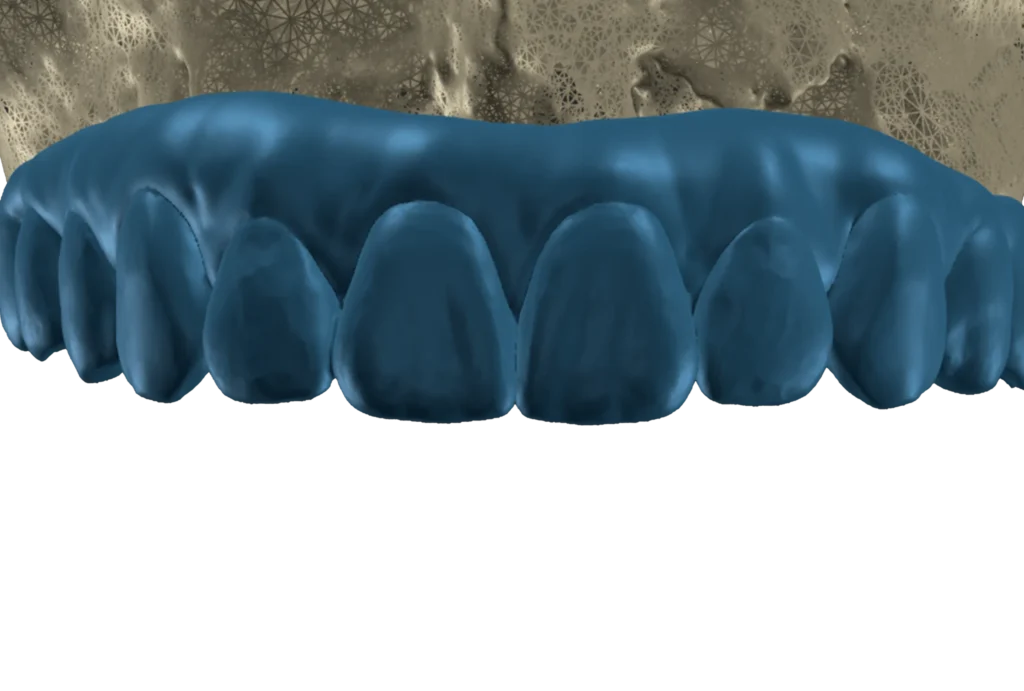
Prosthetic first implant positioning
The final tooth is digitally designed first.
Then the implant is positioned to support it perfectly.
This ensures:
- ideal bite forces
- natural aesthetics
- long‑term hygiene access
Respecting biological timing instead of rushing
Healing time is not a delay.
It is an investment in success.
By allowing bone and soft tissue to mature, we dramatically reduce complications.
Designing implants for long time, not short term success
Anyone can place an implant.
But long‑term implant dentistry requires planning for:
- bone stability
- gum health
- bite dynamics
- patient habits
Our philosophy is simple:
If an implant cannot predictably last decades, it should not be placed yet.
Your Next Step Toward Confident, Long‑Lasting Implants
Most patients searching for implants are not just looking for teeth.
They are looking for certainty.
Certainty that the procedure will work.
Certainty that the investment is safe.
Certainty that they can smile and chew without worry.
The first step is not surgery.
It is a comprehensive implant risk evaluation.
During this consultation we analyze:
- bone quality with CBCT imaging
- gum health and thickness
- bite forces and grinding risk
- medical factors affecting healing
You leave with complete clarity about your options. Just a precise roadmap for long‑term implant success.