

Quick Summary
A dental implant is a small medical-grade titanium root that replaces a missing tooth and integrates with your jawbone.
- Success is not luck. It depends on precise diagnostics, digital planning, and controlled surgery.
- At VIDENT, the implant position is planned starting from the final tooth, not the surgery.
- Most patients feel less discomfort than they expect, and healing typically takes 3–4 months.
- With proper care, implants can last 20+ years or even a lifetime.
- The first step is a personalised diagnostic visit where we evaluate bone, health factors, and design your treatment roadmap.
What a Dental Implant Really Is — and How the Procedure Is Precisely Planned and Performed for Predictable, Long-Term Results
Losing a tooth changes more than your smile.
Chewing becomes uneven. Speech may feel different. And many patients quietly stop smiling in photos.
A dental implant solves this problem in a way that replaces the missing root, not just the visible tooth.
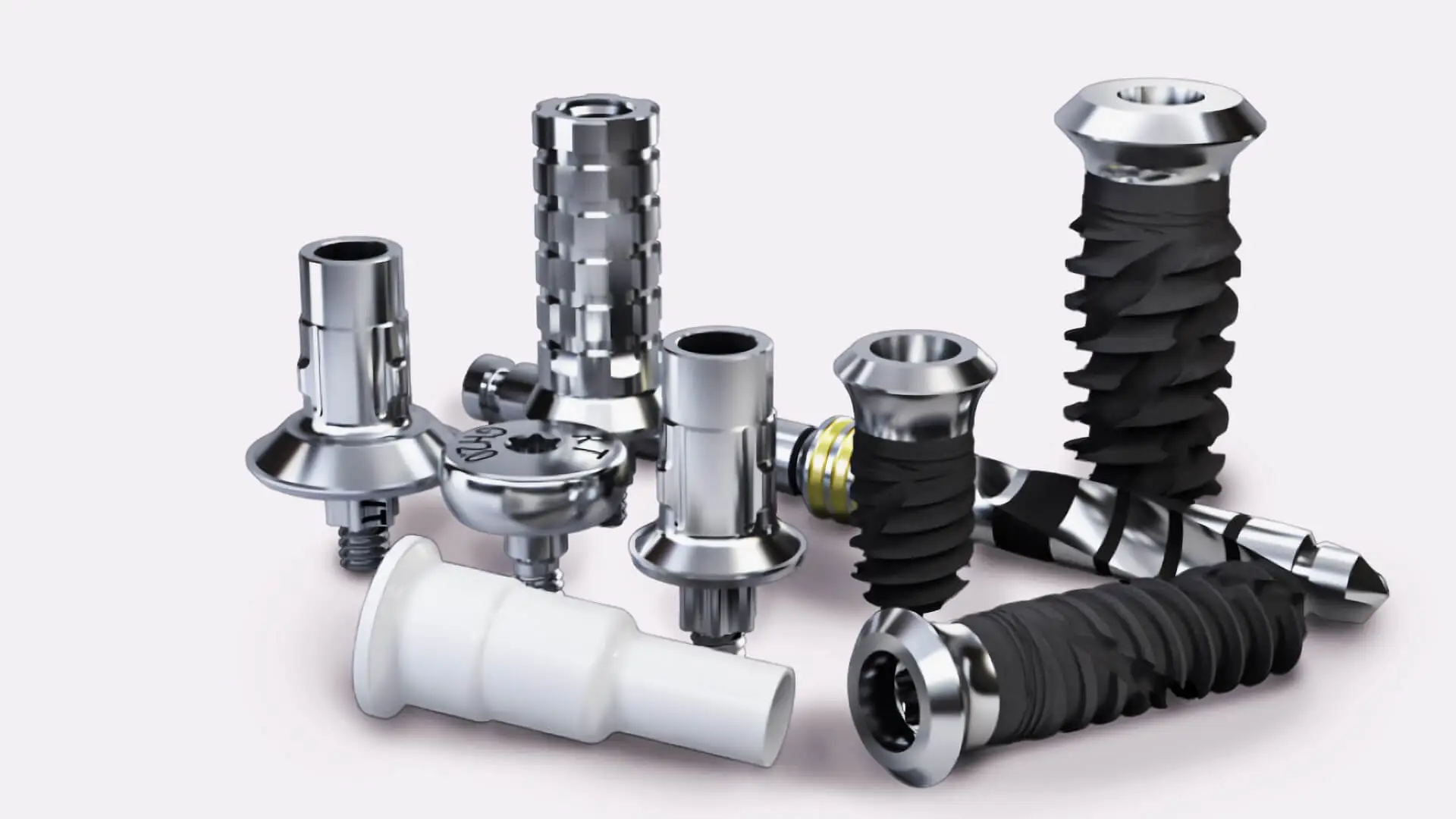
Think of an implant as a foundation post for a new tooth.
It is a small screw-shaped medical device made of biocompatible titanium, a material used in orthopedic surgery for decades because the body accepts it extremely well.
The implant is placed inside the jawbone where the original tooth root used to be. Once healed, it acts as a stable anchor for a crown, bridge, or even a full arch of teeth.
Without replacing the root, the bone slowly shrinks over time.
Replacing the root helps maintain bone structure and facial support.
Why Modern Implants Behave Like Natural Teeth
Osseointegration in Simple Words
Patients in Antwerp often ask:
“How does metal stay inside the bone without moving?”
The answer is a biological process called osseointegration.
After the implant is placed, your bone cells grow directly onto the titanium surface. Over a few months, the bone and implant become firmly fused together.
It becomes part of your body’s structure.
That is why well-integrated implants can handle normal chewing forces just like natural teeth.
Imagine biting into a crisp apple again without worrying a tooth might shift.
That feeling of stability is what patients usually notice first.
When an Implant Is Recommended vs. When Alternatives Are Better
Implants are excellent solutions, but responsible dentistry means being honest about when they are not the best option.
Implants are usually recommended when:
- A single tooth is missing
- Multiple teeth are missing but surrounding teeth are healthy
- A patient wants to avoid grinding down adjacent teeth for a bridge
- Dentures feel unstable or uncomfortable
However, alternatives may be better when:
- Bone volume is extremely limited and grafting is not desired
- Certain uncontrolled medical conditions are present
- A temporary or short-term solution is needed
A good implant consultation is not about pushing treatment.
It is about finding the solution that protects your long-term oral health.
And that begins with one critical question…
Are you actually a good candidate for implants?
How We Determine If You Are the Right Candidate
Many patients assume the answer is simple: “Do I have a missing tooth?”
In reality, the real deciding factor is something else entirely.
Bone Quality & Quantity Evaluation — The Real Deciding Factor
Implants depend on bone stability.
During your evaluation, we measure:
- Bone height
- Bone width
- Bone density
- Distance from nerves and sinus cavities
This is why modern implant dentistry uses 3D CBCT imaging, not just standard dental X-rays.
It allows us to see the jawbone in three dimensions, exactly the way surgeons need to.
If bone is insufficient, solutions like bone grafting or sinus lifting may restore the necessary support.
Medical Conditions That Matter — and Those That Don’t
Patients often worry about health issues disqualifying them.
Common question in Antwerp:
“Can I still get implants if I have diabetes?”
In many cases, yes.
Conditions we carefully evaluate include:
- Uncontrolled diabetes
- Heavy smoking
- Certain medications affecting bone metabolism
- Active periodontal disease
But many conditions do not prevent implant treatment when managed properly.
Transparency matters. We explain risks clearly so decisions feel safe.
Why Two Similar Cases Can Require Different Plans
Two patients may lose the same tooth but need completely different treatment approaches.
Factors that change planning include:
- Bite forces
- Jawbone anatomy
- Smile line and aesthetics
- Gum thickness
- Adjacent tooth positions
Implant dentistry is not just surgery.
It is biomechanical engineering combined with aesthetic design.
Which leads to the most important stage of the entire process.
The stage most patients never see.
What Patients Worry About the Most: Pain, Age, Bone Loss, Healing Time
Before moving forward, patients usually ask four questions:
“Will it hurt?”
Most patients report the procedure feels similar to a simple extraction.
“Am I too old?”
Implants are placed successfully in patients in their 70s and 80s.
“What if I already lost bone?”
Bone reconstruction techniques often make implants possible.
“How long does healing take?”
Most implants integrate within 3–4 months.
Knowing these answers often removes the biggest barrier: uncertainty.
But what truly determines success is something patients rarely hear about.
The planning phase.
How VIDENT Plans Every Implant Precisely — Before Touching a Single Instrument
Here is a perspective many dental websites never explain:
Implant success is decided before surgery even begins.
Surgery is simply the execution of a plan.
CBCT 3D Imaging + Digital Scans = Accurate Mapping of Bone, Nerves, and Prosthetic Space
At VIDENT we combine:
- CBCT 3D imaging (bone anatomy)
- Digital intraoral scans (teeth and bite)
- Facial and smile analysis
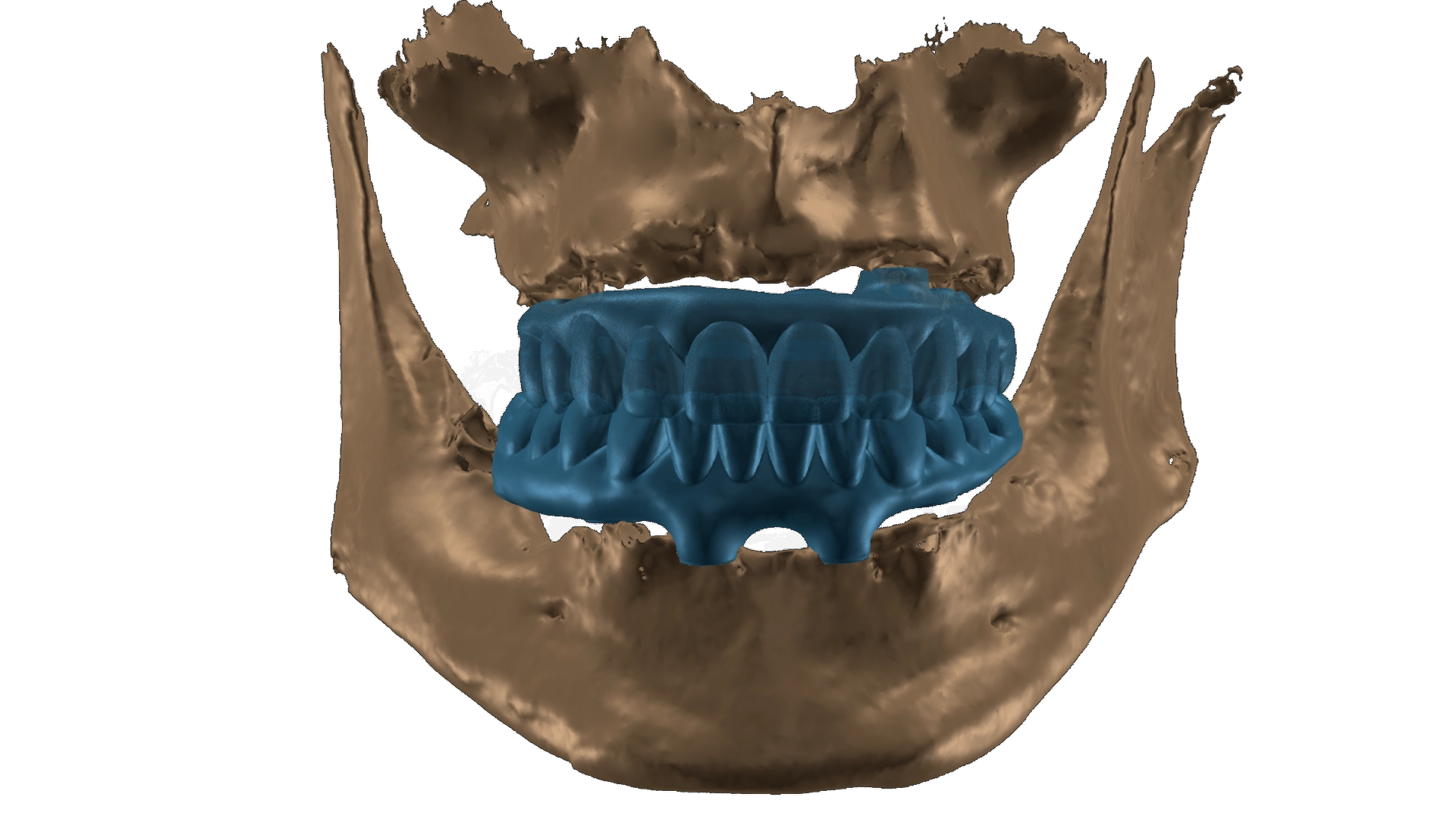
These data sets are merged into a digital planning environment.
The result is a precise virtual model of your mouth where we can analyze:
- bone thickness
- nerve pathways
- prosthetic space
- bite forces
This reduces uncertainty dramatically.
Prosthetically Driven Planning: Starting from the Final Tooth, Not from the Surgery
Most people assume implant planning starts with where the surgeon places the screw.
The better philosophy is the opposite.
We start by designing the final crown first.
Then the implant is positioned exactly where the tooth needs support.
This is called prosthetically driven implant planning, a principle widely recognized in modern implantology.
It ensures the final tooth looks natural, functions properly, and is easy to clean.
Guided Surgery vs. Freehand — When Each Is Used
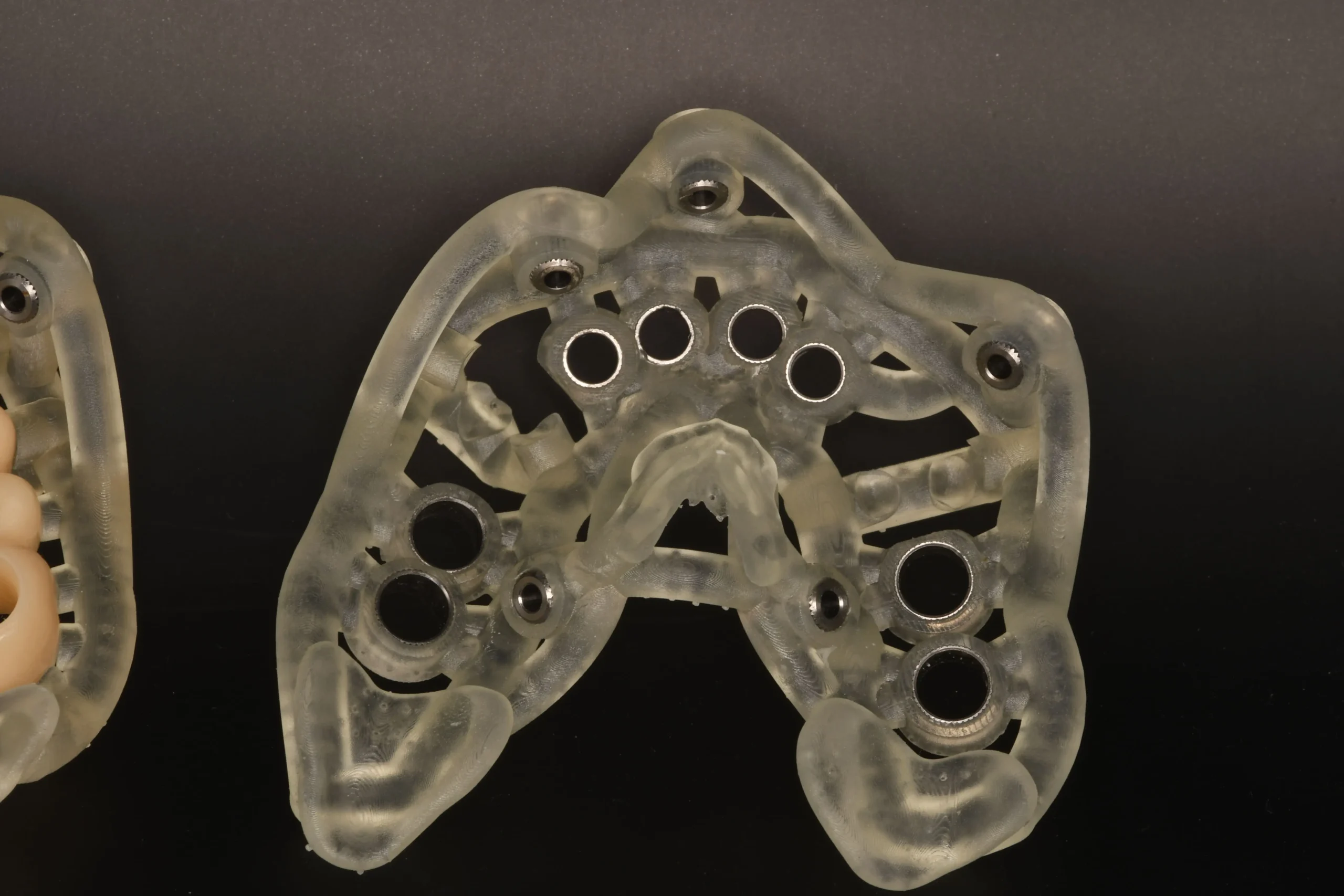
Some implants are placed using surgical guides created from digital plans.
These guides act like precision templates, controlling depth, angle, and position.
However, experienced surgeons may sometimes choose freehand placement when anatomical conditions require flexibility.
The key is not the technique itself.
It is the planning and surgical judgment behind it.
Risk Analysis: How Predictability Is Engineered, Not Guessed
Every implant plan includes risk analysis:
- bone density assessment
- insertion torque expectations
- implant diameter and length selection
- load distribution analysis
This engineering mindset turns implant treatment from a guessing process into a controlled medical procedure.
And once everything is mapped, the procedure itself becomes surprisingly straightforward.
A Simplified Step-by-Step of the Implant Procedure
Many patients delay treatment for years because they imagine surgery as something dramatic.
In reality, the process is far calmer than most expect.
Anaesthesia & Comfort — What You Actually Feel
Local anaesthesia fully numbs the area.
Patients typically feel pressure but not Dental Implants pain..
For anxious patients, additional comfort options can be discussed.
The procedure itself often takes 15–20 minutes for a single implant.
Many patients return to normal activities the next day.
Placing the Titanium Implant with Controlled Torque and Stability
The implant site is prepared with precise surgical instruments.
The implant is then inserted with controlled torque, ensuring stability within the bone.
Primary stability is important because it supports the healing and integration process.
The gum is then closed or shaped around the implant depending on the technique used.
Healing & Osseointegration: How Long It Realistically Takes
Healing involves the bone gradually integrating with the implant surface.
Typical integration time:
- 3–4 months in the lower jaw
- 4–6 months in the upper jaw
During this period, temporary teeth may be provided when aesthetics matter.
And once integration is confirmed, the final stage begins.
Creating the tooth that everyone will see.
Your Final Tooth — How We Shape, Fit, and Adjust the Crown
The implant itself is invisible.
What people notice is the crown.
Digital Design for Natural Shape, Colour, and Bite
Using digital scanning and design software, the crown is shaped to match:
- tooth colour
- bite alignment
- natural tooth anatomy
Modern ceramic materials mimic how enamel reflects light, helping the restoration blend naturally.
Imagine speaking or laughing without anyone guessing which tooth was replaced.
That is the goal.
Temporaries vs. Final Restorations: Why Both Matter
Temporary restorations are often used during healing.
They serve important roles:
- shaping gum tissue
- testing bite comfort
- guiding final aesthetics
The final crown is then fabricated with stronger materials designed for long-term durability.
How We Ensure Long-Term Comfort and Aesthetics
Final adjustments focus on:
- bite balance
- gum contour
- cleaning access
A well-designed implant crown should feel completely natural.
Patients often forget which tooth was replaced.
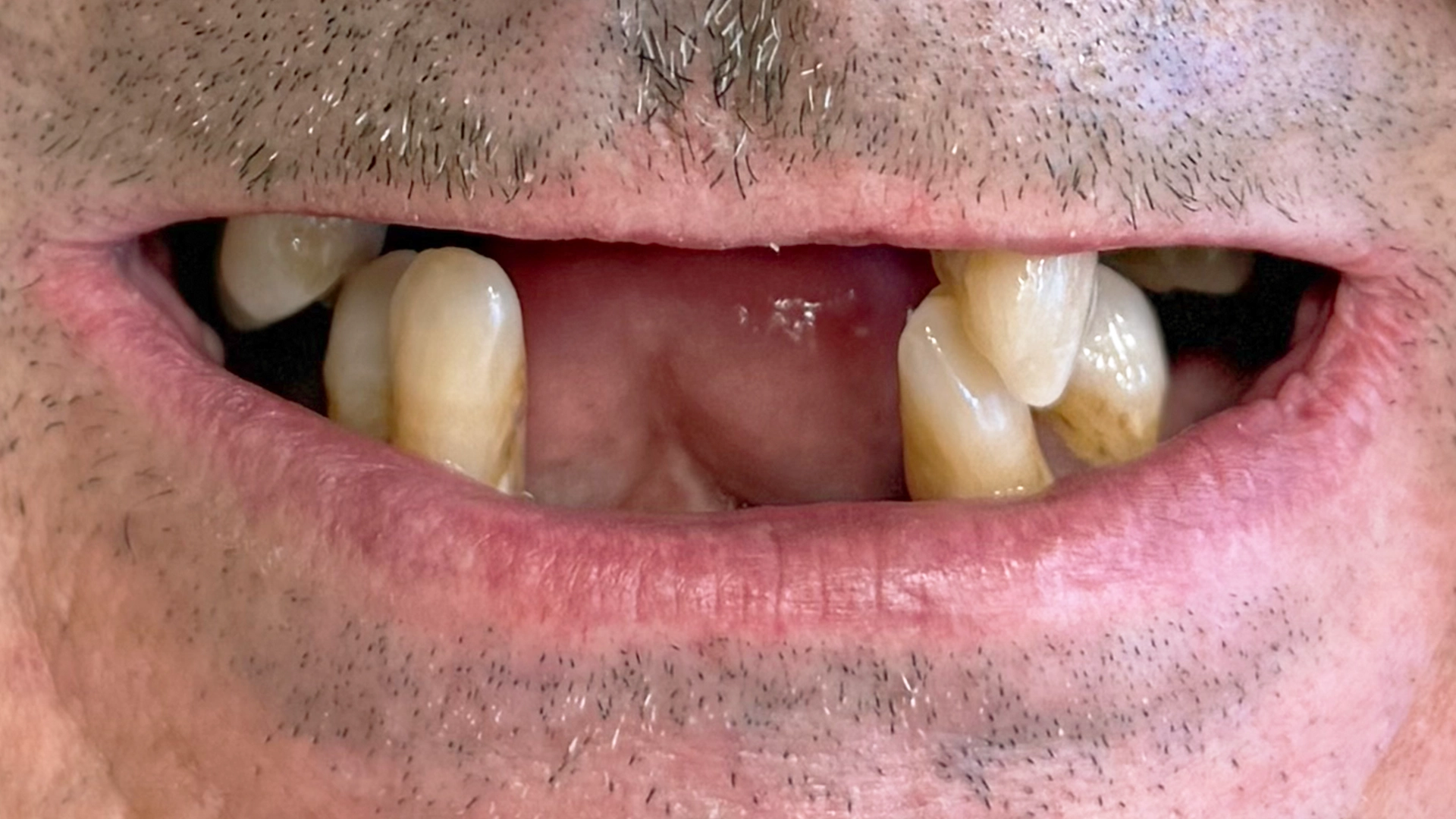
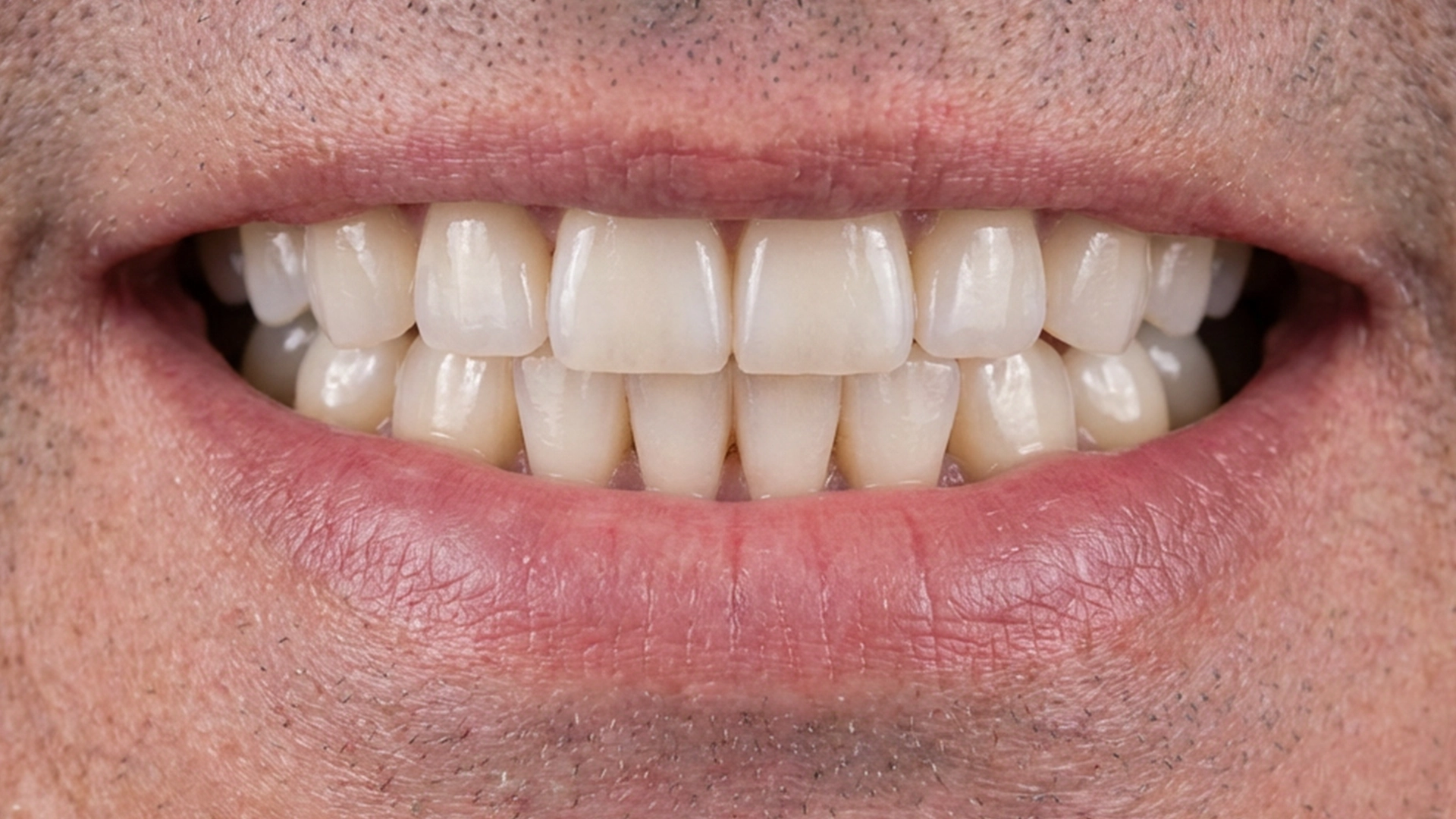
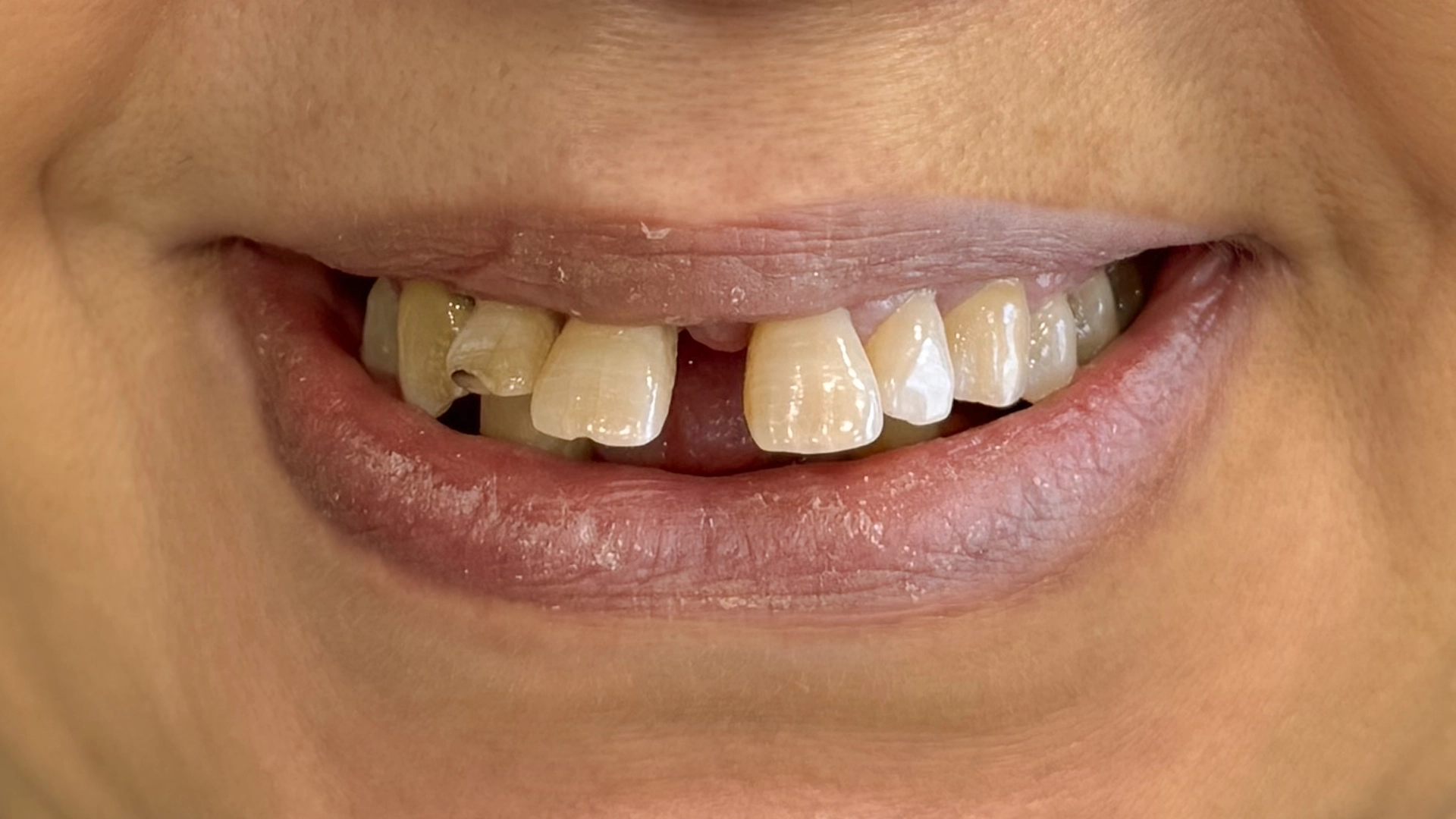
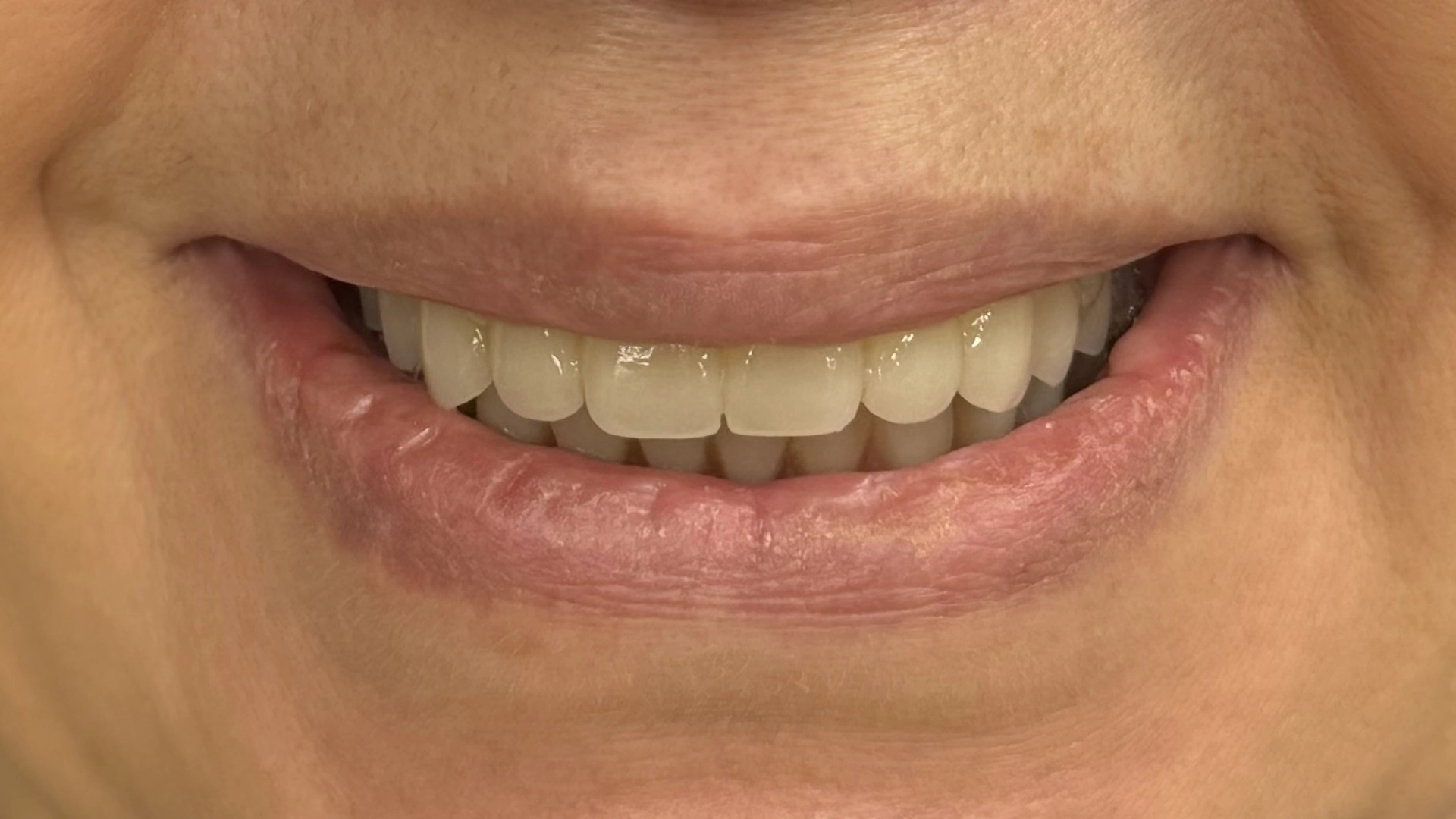
Patient Results: Before & After Dental Implant Treatment
Durability, Complications, and How We Protect Your Investment
Dental implants are among the most predictable procedures in modern dentistry.
But longevity depends on proper care.
How Long Implants Last with Proper Care
Clinical studies show success rates above 98% over 10+ years.
Many implants last decades.
In perspective, replacing a missing tooth early often prevents more complex and costly problems later.
That is the hidden value many patients discover.
Main Causes of Implant Failure — and How VIDENT Prevents Them
The most common causes include:
- untreated gum disease
- poor oral hygiene
- excessive bite forces
Preventive strategies include:
- careful patient selection
- precise surgical planning
- protective night guards when needed
Maintenance Essentials: Hygiene, Bite Forces, Checkups
Implants require the same care as natural teeth:
- daily brushing
- interdental cleaning
- professional checkups
Regular monitoring allows early detection of potential issues.
Want a Clear, Personalised Implant Plan?
The hardest part of implant treatment is usually not the surgery.
It is deciding where to start.
What Happens During Your First Visit
Your consultation focuses on understanding:
- your goals
- your concerns
- your medical history
- your bite and bone structure
What Diagnostics Are Included
A proper implant assessment typically includes:
- CBCT 3D scan
- digital intraoral scanning
- clinical examination
- bite analysis
These diagnostics allow us to design your treatment with precision.
How We Calculate Your Personalised Treatment Roadmap
Your roadmap includes:
- recommended treatment options
- estimated timelines
- risk considerations
- long-term maintenance guidance
You leave knowing exactly what to expect.
Take the First Step Toward a Stable, Natural Smile
Most people who consider implants wait months—or years—because they are unsure about the process.
But clarity changes everything.
Your first visit is simply a diagnostic conversation.
We evaluate your situation, answer every question, and design a plan that makes sense for you.
Book your personalised implant assessment and discover what is truly possible for your smile.
Where I walked in months ago with fear was completely gone in a few minutes. Very good dentist gives good explanations and knows his trade. I am now being treated for 2 implants and everything is perfect. Highly recommended.

Ready to discover if a dental implant is right for you?
Book your personalised implant assessment at VIDENT Dental Clinic in Antwerp today.
📞 Call VIDENT Dental Clinic for a consultation — +32 468 42 86 77Frequently Asked Questions About Dental Implants
Does the implant procedure actually hurt? What will I feel during and after?
Most patients describe implant surgery as pressure, not pain.
Local anaesthesia completely numbs the area, and discomfort afterward is usually milder than a tooth extraction. Any soreness is manageable with routine pain medication and usually lasts 24–48 hours.
Am I too old for dental implants? Is age a limitation?
Age is not a limiting factor — bone quality and health stability are far more important.
Many successful implant patients are in their 70s and 80s. As long as your bone volume and medical conditions are properly evaluated, implants remain a reliable option.
How long does the whole process take from start to finish?
There are two phases:
- Implant placement → 30–60 minutes
- Healing & osseointegration → 3–6 months depending on jawbone density
If you need bone grafting, your timeline might extend slightly. Once healed, crown fabrication takes 1–2 weeks.
What if I don’t have enough bone? Does that mean I can’t get an implant?
Not necessarily.
Modern techniques like bone grafting, sinus lifting, and ridge augmentation often make implants possible even after years of bone loss.
Your 3D CBCT scan determines which approach is best. Many patients who assume “I can’t get an implant” are actually excellent candidates once bone is restored.
How long do dental implants really last? Are they permanent?
With proper hygiene and professional checkups, implants can last 20+ years and often a lifetime.
Most complications are preventable and come from:
- smoking
- untreated gum disease
- poor home hygiene
- heavy grinding without a night guard
Implants are a long-term investment — not a temporary fix.
How much do dental implants cost? Why do prices vary so much?
Prices vary based on:
- bone condition
- number of implants
- type of crown
- need for grafting
- brand of implant
- digital vs freehand surgery
The important part is value:
A well-planned implant prevents future bone loss, bridge damage, or repeated denture problems.
Cheaper treatments that fail early end up costing more long-term.
Will my implant look like a natural tooth or can people notice it?
A properly designed implant crown is indistinguishable from a natural tooth.
Digital design, shade-matching technology, and gum-shaping temporaries help the tooth blend seamlessly into your smile.
Most patients say even close friends cannot tell which tooth is restored.
Can my body reject the implant? What are the risks?
Titanium is biocompatible, meaning your body accepts it extremely well.
True “rejection” is rare.
Most failures come from healing issues, infection, or excessive bite force — all of which can be minimized with proper planning and follow-up care.
If an implant ever fails, it can often be replaced after the area heals or is regenerated.
Is it safe to get dental implants if I have diabetes, BP issues, or take medications?
Most medical conditions do not prevent implants if they are controlled.
What matters is:
- stabilised blood sugar (for diabetic patients)
- proper blood pressure management
- reviewing medications like bisphosphonates
Your full medical review ensures implant treatment is planned safely and predictably.
How do I know if I should choose an implant or a bridge/denture instead?
Implants are generally the most stable and long-lasting option.
But in some cases a bridge or denture may be more appropriate depending on:
- financial goals
- bone availability
- time constraints
- oral health conditions
A personalised consultation helps compare all three options so you can confidently choose what fits your lifestyle.