

Achieving Predictable Results
When implant treatment is described as “complex,” patients usually feel one thing before anything else: uncertainty.
At VIDENT, complex dental implants cases are approached with a fundamentally different mindset.
More precise.
More structured.
More predictable before treatment begins.
This page exists to explain how predictability is built, step by step, before any irreversible decision is made.
Why Do Complex Implant Cases Require a Different Level of Planning?
A complex implant case is not defined by difficulty alone.
It is defined by the number of variables that must align perfectly over time.
These variables often include:
- Reduced bone volume or density
- Previous implant or dental work
- Long‑standing bite imbalance
- Anatomical limitations near nerves or sinuses
- Esthetic demands combined with functional load
- High expectations for longevity and stability
In such cases, experience alone is not enough.
What matters is how decisions are made before treatment starts.
Complex cases require:
- Fewer assumptions
- More measurements
- Clear sequencing
- Verified outcomes before execution
What Role Does Digital Planning Play in Complex Implant Cases?
Digital planning is where uncertainty is reduced to data.
At VIDENT, complex implant cases are never planned in isolation or in the chair alone.
They are planned in a digital environment where every parameter can be evaluated together.
Digital planning allows:
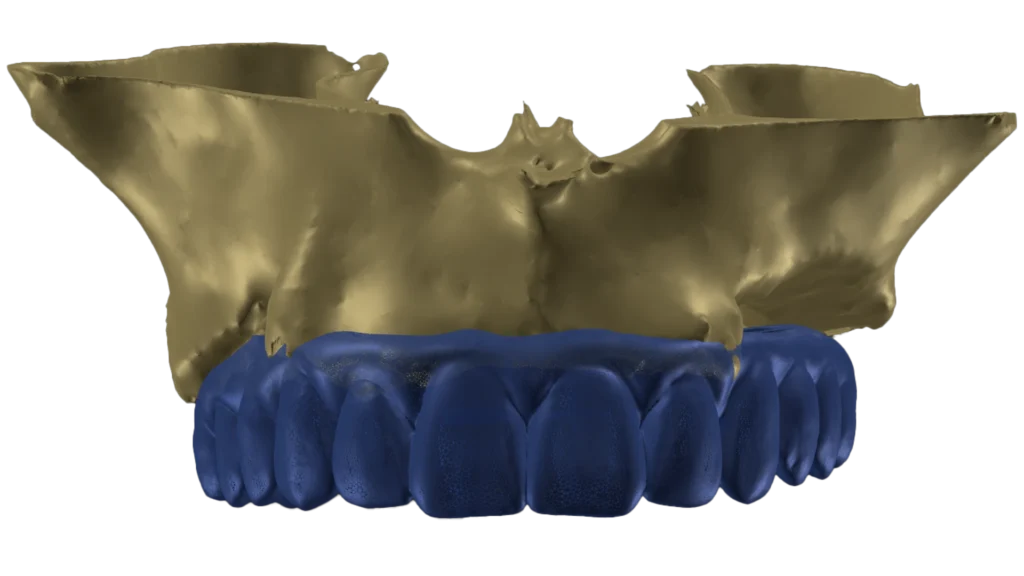
- Three‑dimensional visualization of bone, nerves, and anatomical limits
- Precise implant positioning based on prosthetic outcome, not convenience
- Simulation of angulation, depth, and load distribution
- Alignment between surgical placement and final restoration
- Early detection of conflicts before they become clinical problems
Most importantly, digital planning allows outcomes to be evaluated before treatment begins.
Patients are not asked to “trust the process.”
They are shown the process.
This approach removes a major source of mental friction:
The fear of discovering problems after irreversible steps have been taken.
How Does Bite Analysis Affect Long Term Implant Success?
Bite forces are silent.
They do not announce themselves early.
They reveal themselves over time.
In complex implant cases, ignoring bite dynamics is one of the most common sources of long‑term complications.
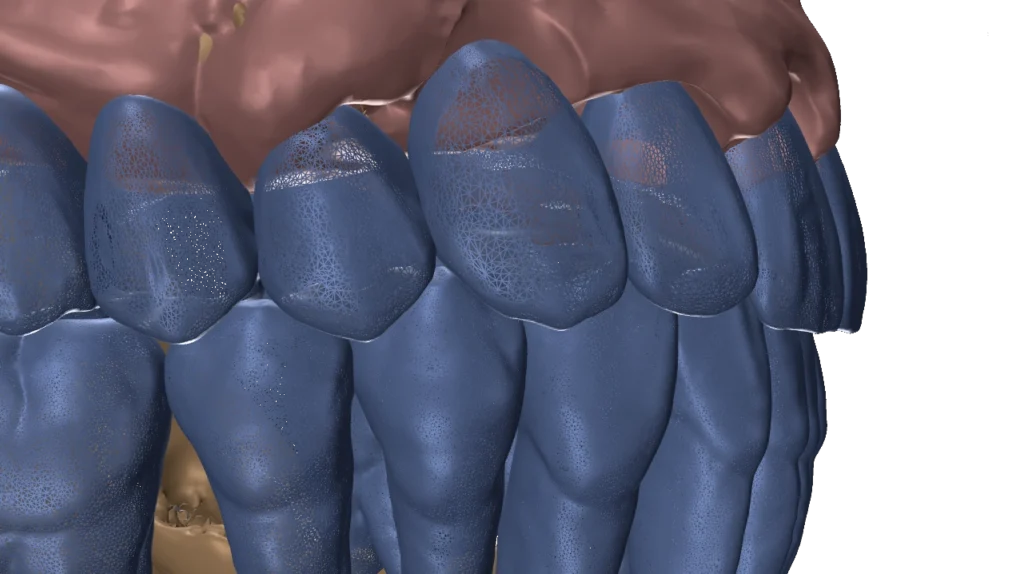
At VIDENT, bite analysis is integrated into implant planning from the beginning, not after placement.
This includes:
- Evaluation of existing bite patterns
- Identification of excessive forces or asymmetries
- Analysis of functional movements, not just static contact
- Planning implant position based on force direction, not only bone availability
An implant that looks ideal on X‑ray but sits in an unfavorable force environment is not predictable long term.
By incorporating bite analysis early:
- Mechanical overload is reduced
- Bone stress is distributed more evenly
- Prosthetic components are protected
- Longevity becomes a design feature, not a hope
For patients focused on durability and control, this step changes everything.
How Does Bone Quality and Volume Influence Implant Planning?
Bone is not a uniform material.
Its quality, density, and architecture vary significantly from patient to patient and even within the same jaw.
In complex cases, bone assessment goes far beyond asking “Is there enough bone?”
Planning considers:
- Bone density and its ability to support primary stability
- Bone volume in three dimensions, not just height
- Relationship to anatomical structures
- Healing capacity based on individual biology
Digital imaging allows these factors to be evaluated precisely and without guesswork.
This enables decisions such as:
- Whether bone augmentation is necessary or avoidable
- Which implant design is most appropriate
- How loading should be sequenced
- How risk can be reduced before surgery
Nothing is rushed.
Nothing is improvised.
For patients who fear making the wrong decision, this level of planning restores a sense of control.
How Is Expert Implant Planning Performed at VIDENT?
Expert planning at VIDENT follows a structured, repeatable system.
It is not dependent on mood, speed, or assumptions.
The process typically includes:
- Comprehensive digital diagnostics
- Integrated analysis of bone, bite, and esthetics
- Prosthetic‑driven implant positioning
- Scenario comparison before choosing a final plan
- Clear sequencing from surgery to final restoration
Each step answers a specific question before moving to the next.
Patients are involved in understanding:
- What is planned
- Why it is planned that way
- What outcomes are expected
- How variability is minimized
This approach does not aim to impress.
It aims to reassure.
When patients feel that decisions are made calmly, logically, and transparently, resistance disappears naturally.
Not because they were convinced.
Because nothing feels uncontrolled.
A Final Note on Predictability
Predictability is not a promise.
It is the result of preparation.
For complex implant cases, predictability comes from:
- Seeing the outcome before treatment
- Understanding the sequence
- Reducing unknowns early
- Respecting biology and mechanics equally
At VIDENT, expert planning exists to support patients who value clarity over speed, logic over slogans, and long‑term stability over short‑term solutions.
Where I walked in months ago with fear was completely gone in a few minutes. Very good dentist gives good explanations and knows his trade. I am now being treated for 2 implants and everything is perfect. Highly recommended.

Excellent professional. Every consultation was perfect and painless. Very satisfied with the final result of my dental implant. Assistants are friendly and professional.
For the moment, I have my temporary teeth on implants on top (so I’m not walking around toothless as I feared 🥳). I’m really so happy with this dentist (he’s really super good, in my opinion, an expert at his work! (He works really focused … More
Very satisfied with this practice. I ended up here with an urgent problem, and I didn’t hesitate to become a patient. The welcome was very warm. I had implants placed by Dr. Victor, which wasn’t obvious to me. He reassured me and went … More
Very satisfied. Whether it’s for a checkup, implant, or crown. Very professional and a fair price. Thanks to Victor, I have a radiant smile. And also a big shout-out to the super friendly Desi. TOP TEAM!!!
A very good professional and a person…Always willing to help….We are very satisfied🙂🙂😊😊A great dentist and person…Always listens, explains crowns, implants, he is the man…THANK YOU Dr. Viktor Petrov and Desislava Tsvetkova, you are great too….
Professional, hygienic, painless, and fast. Everything you could want from a dentist. You can also come here for implants and root canal treatments, all at a fair price and without a long wait.