

Quick Expert Summary
Choosing a dental implant brand is not a cosmetic decision. It is a long-term medical decision that can affect bone stability, gum health, and implant survival for decades.
Here is the simplified truth most patients never hear:
- Straumann — strongest long-term scientific evidence and exceptional performance in difficult bone conditions
- Nobel Biocare — world leader in complex restorations like All-on-4 full-arch implants
- MegaGen — modern design with very strong initial stability, often used in immediate implant cases
But here is the surprising part:
There is no universally “best” implant brand.
The right implant depends on:
- Bone density
- Bite force and grinding habits
- Gum thickness
- Surgical complexity
- Long-term maintenance risk
At VIDENT Dental Clinic in Antwerp, implant brands are selected after advanced diagnostics, not before.
If you’re considering dental implants, this guide will help you understand what actually determines whether an implant lasts 20 years… or 30+ years.
Why Dental Implant Brand Choice Is a Medical Decision, Not a Marketing One
Many patients believe implant brands are like phone brands—different logos, same function.
That assumption can quietly cost people decades of stability.
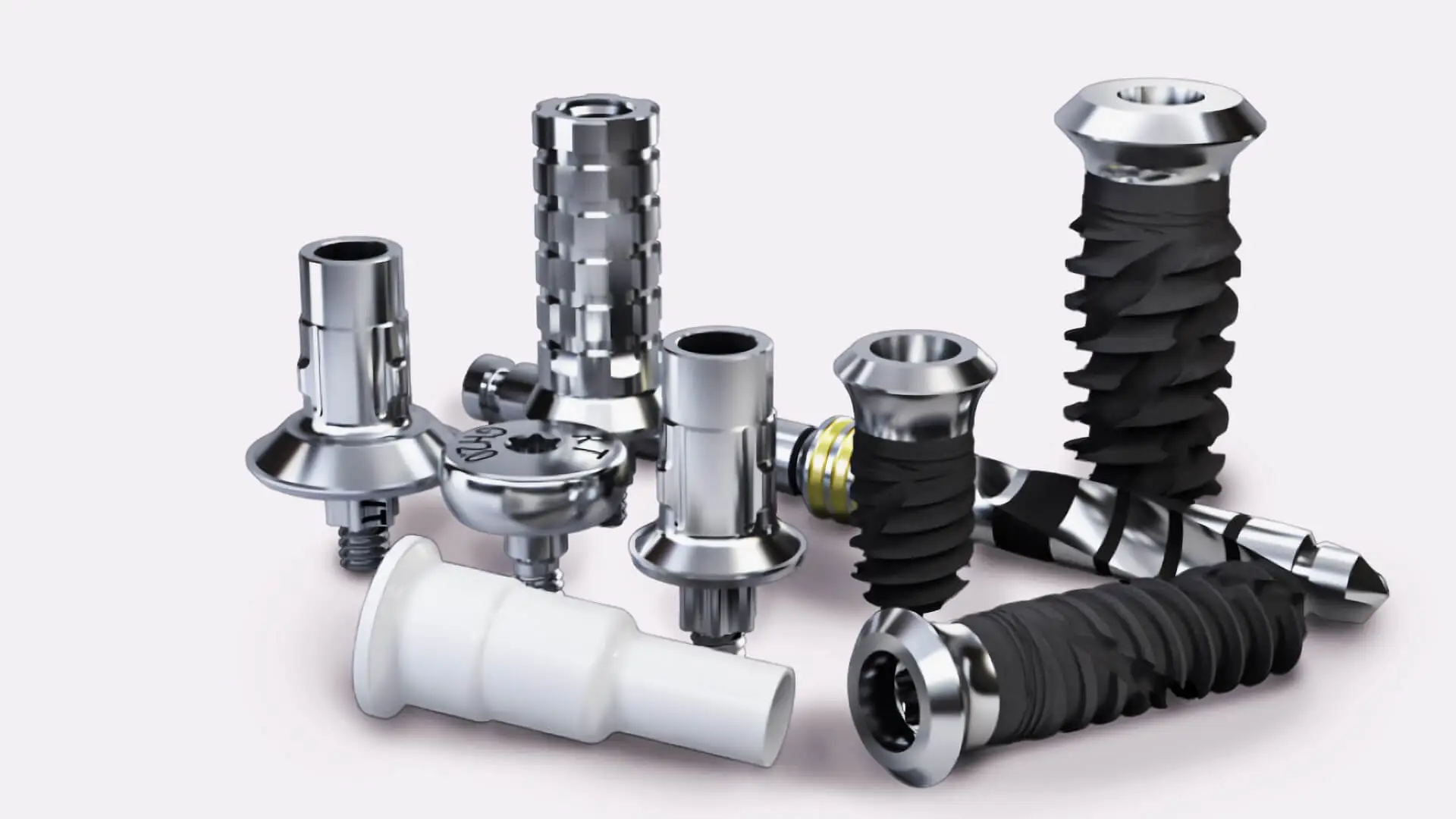
Modern dental implants differ profoundly in titanium alloy composition, surface micro-texture, thread design, and biomechanical load distribution.
These differences influence something critical: how the bone bonds to the implant — a process called osseointegration.
Are All Dental Implants Basically the Same Screw?
At first glance, yes.
Most dental implants look like small titanium screws placed inside the jawbone.
But under a microscope, the differences are profound.
Implants vary in:
- Titanium alloy composition
- Surface micro-texture
- Thread design
- Implant-abutment connection
- Biomechanical load distribution
A patient often asks: “If implants look the same on X-ray, does the brand really matter?”
Clinically, yes. Two implants may appear identical on day one. Ten years later, one may still be rock solid while another develops bone loss or inflammation. That difference rarely comes from luck. It comes from engineering and biological compatibility.
How Implant Brand Directly Affects Bone Stability, Gum Health, and Longevity
Imagine two identical buildings.
One has deep foundations engineered for earthquakes.
The other rests on shallow concrete.
Both look identical on opening day.
But after years of pressure and movement, the difference appears.
Dental implants behave the same way.
The brand affects:
1. Bone preservation
Certain surfaces stimulate faster and stronger bone attachment.
2. Bacterial resistance
Surface roughness can either discourage or encourage bacterial colonization.
3. Soft tissue integration
The implant neck design influences how gums seal around the implant.
That seal is critical.
Without it, bacteria slowly enter the bone area.
That is how peri-implantitis begins.
A condition responsible for many late implant failures.
Why the Real Differences Appear After 10–20 Years, Not in the First Year
Here is something most marketing brochures never say.
Almost every implant brand looks successful during the first year.
Early success rates often exceed 95%.
But dentistry is not a one-year game.
True implant dentistry is measured over 10, 15, even 25 years.
Over time the jaw experiences:
- chewing pressure
- micro-movement
- bacterial exposure
- gum recession
- systemic health changes
This is where implant design philosophy starts to matter.
Some systems are engineered specifically for long-term biological stability, not just initial placement.
What Does “Lifetime Dental Implant” Really Mean?
Patients often hear the phrase “implants last a lifetime.”
But medicine rarely deals in absolutes.
Understanding the real meaning removes anxiety and unrealistic expectations.
Implant Survival Rate vs True Long Term Clinical Success
An implant can technically be classified as “surviving” even if problems exist.
Clinically we distinguish two metrics:
Implant survival
The implant is still physically in the bone.
Implant success
The implant remains healthy with:
- stable bone levels
- healthy gum tissue
- no pain or infection
- functional chewing
A long-term successful implant should maintain less than 1–2 mm of bone loss after the first year.
The difference matters because some implants survive but require frequent maintenance or treatment.
Patients deserve to know this distinction.
Common Long Term Implant Failures Patients Are Never Warned About
When implants fail late, it is rarely sudden.
It usually develops slowly.
Common causes include:
- Peri-implantitis (implant gum disease)
- Excessive bite force or teeth grinding
- Poor implant positioning
- Weak implant-abutment connection
- Low bone density
Many patients tell us the same story.
They were told the implant would last forever.
But no one explained how to prevent long-term complications.
This is why implant system design matters.
Some systems are more forgiving under biological stress.
Can Any Dental Implant Truly Last a Lifetime?
Yes — under the right conditions.
Many implants have been functioning successfully for more than 30 years.
But longevity depends on a combination of:
- implant design
- surgical placement
- prosthetic planning
- patient hygiene
- regular monitoring
In other words:
The implant brand is one piece of a much larger system.
Let’s look at how the three leading systems compare.
Straumann Implants – Swiss Precision and Long Term Evidence
When clinicians discuss implant reliability, one name appears repeatedly in scientific literature.
Straumann.
What Makes Straumann Different at a Material and Surface Level?
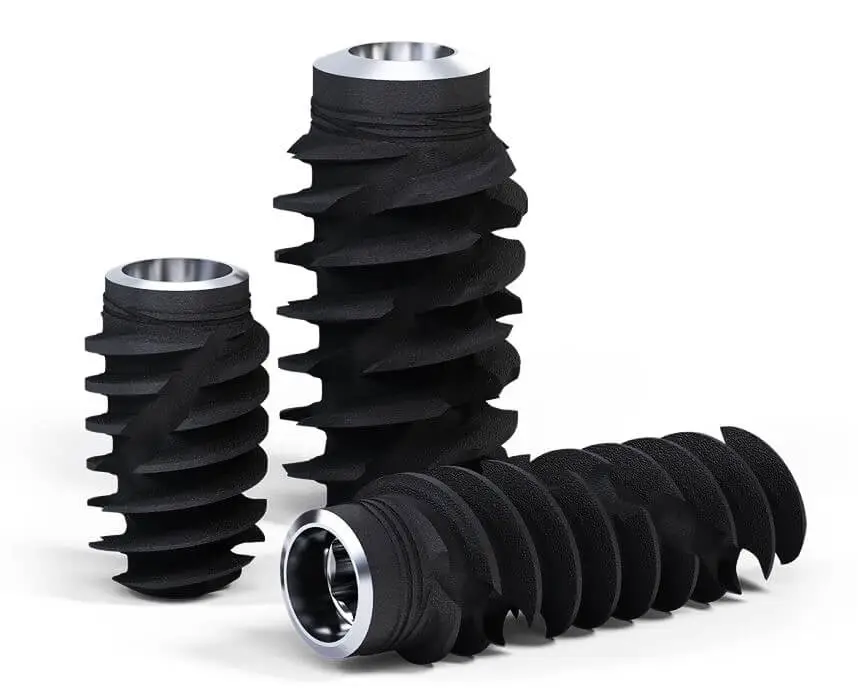
Straumann implants are known for two technological innovations:
Roxolid® alloy
A titanium-zirconium alloy that is stronger than pure titanium. This allows smaller implants with higher mechanical strength.
SLActive® surface
A chemically modified surface designed to accelerate bone integration.
Studies show this surface can improve early bone attachment, especially in compromised bone.
This matters in patients with:
- low bone density
- smokers
- immediate implant placement
Straumann Performance in Low Bone Density and High Risk Patients
Certain patients present biological challenges.
Examples include:
- osteoporosis
- diabetes
- thin jawbone
- sinus proximity
Straumann implants are widely studied in these situations.
Clinical data spanning more than two decades consistently shows high survival rates.
That evidence base is one reason many surgeons consider Straumann the “gold standard” for long-term predictability.
Who Is Straumann the Best Choice For?
Straumann is often recommended for patients who prioritize maximum long-term reliability.
Common indications include:
- complex bone conditions
- single implants in visible areas
- patients wanting the longest clinical track record
But reliability is not the only factor in implant dentistry.
Sometimes prosthetic flexibility matters even more.
That is where Nobel Biocare shines.
Nobel Biocare – Prosthetically Driven Implant Dentistry
Nobel Biocare is one of the pioneers of modern implant dentistry.
Their philosophy is different.
Instead of focusing only on the implant itself, they design systems around the final prosthetic restoration.
Why Nobel Biocare Is a Leader in Full Arch and All-on-4 Treatments
If you have heard about All-on-4 dental implants, Nobel Biocare helped pioneer the concept.
The system allows a full arch of teeth to be supported by four strategically angled implants.
Advantages include:
- reduced need for bone grafting
- faster treatment timelines
- strong prosthetic support
This is why Nobel systems are widely used for full mouth implant rehabilitation.
Implant–Abutment Connection and Its Impact on Long Term Stability
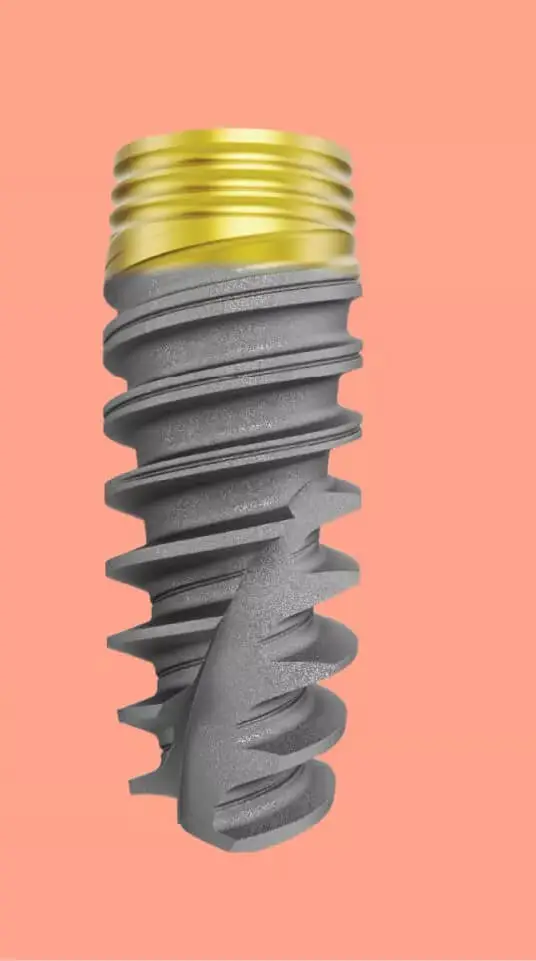
The connection between implant and crown support structure (abutment) plays a critical role in stability.
Nobel uses precision conical connections designed to minimize micro-movement.
Why is that important?
Micro-movement can create microscopic gaps where bacteria accumulate.
Over years, that may lead to bone loss around the implant neck.
High-precision connections reduce that risk.
When Nobel Biocare Is the Smarter Clinical Choice
Nobel systems are particularly useful when:
- performing full arch restorations
- restoring multiple implants in one prosthesis
- requiring advanced digital planning
Their prosthetic ecosystem is extremely versatile.
For many complex rehabilitations, that flexibility becomes invaluable.
But some implant designs focus on something else entirely:
Immediate stability after placement.
MegaGen Implants – High Primary Stability and Modern Design
MegaGen implants have grown rapidly in popularity.
Their engineering focuses on strong mechanical grip in the bone during placement.
Why MegaGen Became Popular in Immediate Implant Cases
When a tooth is removed and an implant is placed the same day, stability becomes critical.
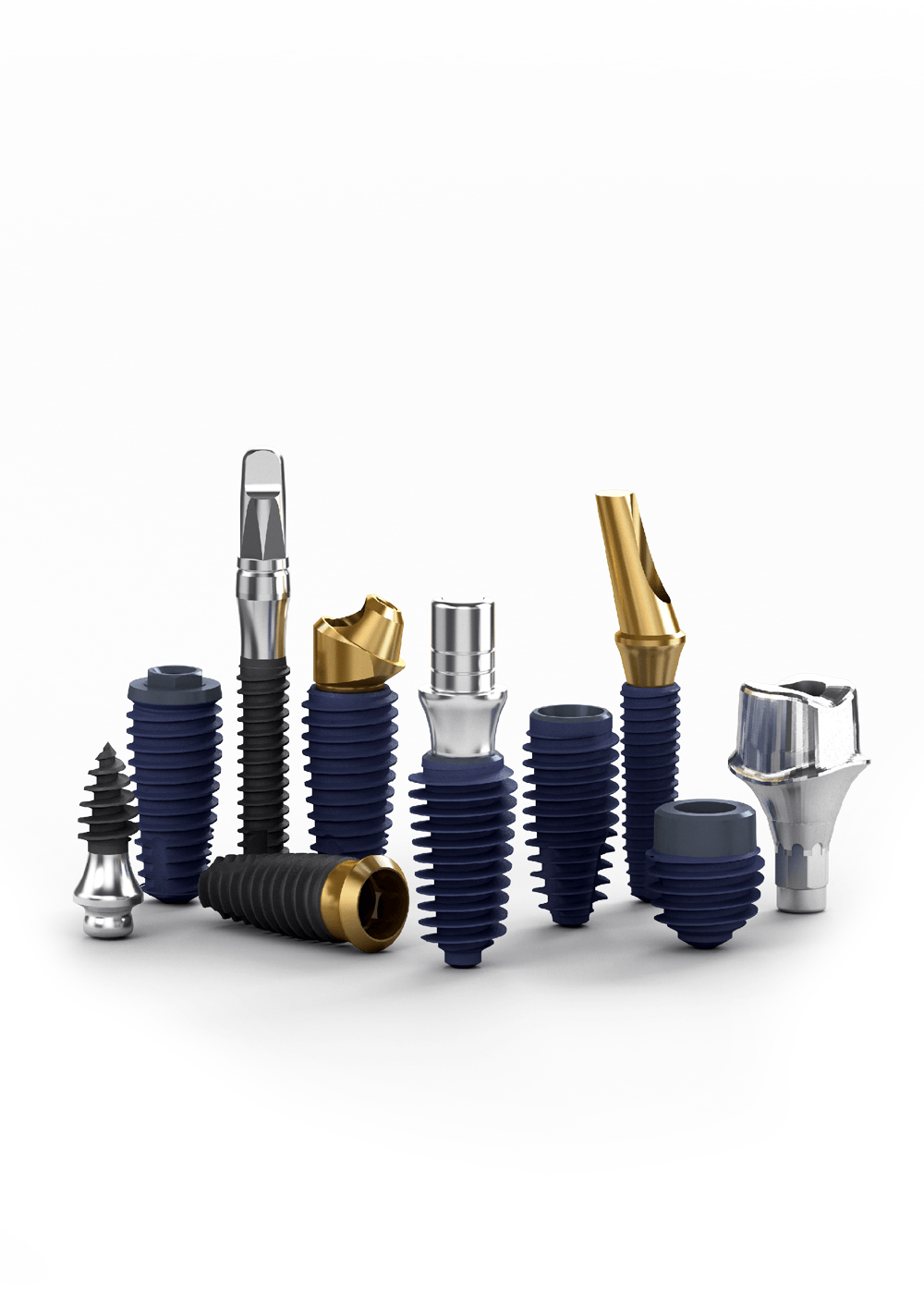
MegaGen’s thread design provides high primary stability.
That allows clinicians to consider:
- immediate implant placement
- sometimes even same-day temporary teeth
Patients love the idea of walking in with a damaged tooth and leaving with a new one.
Imagine looking in the mirror that evening and already seeing a tooth again.
That emotional relief is powerful.
Performance in Immediate Loading and Extraction Sockets
MegaGen implants are often used in:
- fresh extraction sockets
- immediate loading cases
- aesthetic zones requiring rapid stabilization
Their macro design compresses bone during insertion, improving initial fixation.
However, initial stability is only part of the long-term equation.
Where Long Term Clinical Data Is Still Limited
Compared with Straumann and Nobel, MegaGen systems have shorter long-term clinical history.
This does not mean they are unreliable.
It simply means 20–30 year data is still developing.
Evidence is strong in the short-to-medium term, especially for immediate placement protocols.
Which Patients Are (and Are Not) Ideal Candidates for MegaGen
MegaGen may be suitable for:
- immediate implant placement
- patients with moderate bone density
- cases where rapid stability is needed
However, clinicians may prefer other systems when:
- extremely long-term evidence is required
- bone quality is very poor
- complex prosthetic planning is needed
This brings us to the most practical comparison.
Straumann vs Nobel vs MegaGen – Direct Clinical Comparison
Osseointegration Quality Over Time (3 Months, 1 Year, 10+ Years)
3 Months
All three brands integrate successfully in most patients.
1 Year
Differences remain minimal when placed correctly.
10+ Years
This is where the scientific evidence strongly favors:
- Straumann
- Nobel Biocare
They simply have longer documented clinical follow-up.
Marginal Bone Loss and Soft Tissue Stability
Marginal bone stability depends heavily on:
- implant neck design
- connection precision
- surgical technique
Straumann and Nobel show consistently low long-term marginal bone loss in published studies.
Aesthetic Outcomes in the Front Teeth Area
Front teeth implants require careful management of:
- gum contours
- papilla height
- implant positioning
Straumann implants are frequently chosen for high-aesthetic single tooth cases.
Performance in High Risk Patients (Smokers, Bruxism, Diabetes)
Higher-risk patients benefit from systems with strong evidence.
For these situations clinicians often prefer:
- Straumann
- Nobel Biocare
Because of extensive long-term research data.
But brand choice also influences another major concern:
implant infections.
Implant Brand and the Risk of Peri-Implantitis
Peri-implantitis is one of the leading causes of late implant complications.
Understanding how implant design affects infection risk is crucial.
Surface Design, Bacterial Adhesion, and Inflammation Risk
Implant surfaces are engineered to encourage bone growth.
But overly rough surfaces may also allow bacterial adhesion.
Balance is critical.
Modern surfaces attempt to optimize:
- bone contact
- bacterial resistance
Which Implant Systems Are More Forgiving Long Term?
Systems with:
- stable connections
- well-studied surface treatments
- accessible components
tend to be easier to manage if complications arise.
That is why global implant ecosystems matter.
Maintenance, Cleaning, and Future Treatability
Patients rarely think about this.
But if an implant component breaks 10 years later, availability matters.
Established implant brands typically provide:
- replacement components
- compatible tools
- global service networks
This reduces long-term treatment risk.
There Is No “Best Implant Brand” – Only the Right Brand for the Right Patient
Here is the insight that changes everything.
Implant success is not determined by brand alone.
It is determined by matching the right system to the right biology.
Why Bone Quality, Bite Force, and Case Complexity Matter More Than the Logo
Every patient has a unique biomechanical profile.
Key factors include:
- bone density
- jaw shape
- chewing force
- gum thickness
The correct implant is the one that respects these biological realities.
Implant Brand vs Surgeon Experience – What Actually Matters More?
Research consistently shows:
surgeon experience has greater impact than implant brand.
A highly skilled surgeon can achieve excellent results with several systems.
But even the best implant cannot compensate for poor planning.
The Hidden Cost of Choosing the Wrong Implant System
The real cost of implants is not the initial procedure.
It is future complications.
Bone grafts, infections, or prosthetic replacement can cost far more than the original treatment.
That is why implant selection must start with diagnostics — not marketing.
How Implant Brands Are Selected at VIDENT Dental Clinic Antwerp
At VIDENT, implant choice is never predetermined.
Each case begins with biological analysis.
Advanced Diagnostics Before Implant Selection (CBCT, Occlusion, Risk Profile)
Every implant patient undergoes detailed evaluation including:
- CBCT 3D bone imaging
- bite force analysis
- gum tissue evaluation
- medical risk assessment
This allows precise planning of:
- implant position
- implant size
- implant system
Why VIDENT Never Uses One Implant Brand for All Patients
Many clinics use a single implant brand for simplicity.
We do the opposite.
Different cases require different solutions.
For example:
- Straumann for complex bone biology
- Nobel for full-arch rehabilitation
- MegaGen for specific immediate placement cases
The goal is simple:
maximize long-term stability and patient safety.
Where I walked in months ago with fear was completely gone in a few minutes. Very good dentist gives good explanations and knows his trade. I am now being treated for 2 implants and everything is perfect. Highly recommended.

Excellent professional. Every consultation was perfect and painless. Very satisfied with the final result of my dental implant. Assistants are friendly and professional.
For the moment, I have my temporary teeth on implants on top (so I’m not walking around toothless as I feared 🥳). I’m really so happy with this dentist (he’s really super good, in my opinion, an expert at his work! (He works really focused … More
Very satisfied with this practice. I ended up here with an urgent problem, and I didn’t hesitate to become a patient. The welcome was very warm. I had implants placed by Dr. Victor, which wasn’t obvious to me. He reassured me and went … More
Very satisfied. Whether it’s for a checkup, implant, or crown. Very professional and a fair price. Thanks to Victor, I have a radiant smile. And also a big shout-out to the super friendly Desi. TOP TEAM!!!
A very good professional and a person…Always willing to help….We are very satisfied🙂🙂😊😊A great dentist and person…Always listens, explains crowns, implants, he is the man…THANK YOU Dr. Viktor Petrov and Desislava Tsvetkova, you are great too….
Professional, hygienic, painless, and fast. Everything you could want from a dentist. You can also come here for implants and root canal treatments, all at a fair price and without a long wait.
Your Next Step: Discover Which Implant Is Right for You
If you’re researching implant brands, you’re already doing something smart.
You are thinking long-term.
But the truth is:
The right implant cannot be chosen from a website alone.
It requires clinical evaluation of your bone, bite, and medical profile.
At VIDENT Dental Clinic Antwerp, we guide patients through this process step by step.
No pressure.
Just clear, honest medical advice.
If you want to explore your options, schedule a personalized implant assessment.
Ready to discover which dental implant brand is right for you?
Book your personalized implant assessment at VIDENT Dental Clinic in Antwerp today.
📞 Call VIDENT Dental Clinic for a consultation — +32 468 42 86 77Frequently Asked Questions
1. Which dental implant brand lasts the longest?
The dental implant brands with the strongest long-term clinical evidence are Straumann and Nobel Biocare. Both companies have implants that have been studied in patients for more than 20–30 years.
However, implant longevity depends on more than brand alone. The lifespan of a dental implant is influenced by:
- bone density and bone volume
- surgical placement accuracy
- bite force and teeth grinding
- oral hygiene and maintenance
- systemic health conditions such as diabetes
When these factors are properly managed, a high-quality dental implant can last several decades and sometimes a lifetime.
In clinical practice, the best implant brand is the one matched precisely to the patient’s bone structure and treatment plan.
2. Are expensive dental implant brands really better?
Not always—but in many cases higher-tier implant systems provide important advantages.
Premium implant brands often invest heavily in:
- long-term clinical research
- advanced surface technologies
- precision implant-abutment connections
- global component availability for future repairs
These factors can reduce the risk of complications such as implant loosening, bone loss, or peri-implantitis over time.
Think of implant brands like aircraft engineering rather than consumer products. The difference may not be visible on day one, but it can become significant after years of mechanical stress and biological interaction.
3. Is Straumann the best dental implant brand?
Straumann is widely considered one of the most scientifically validated dental implant systems in the world.
Its reputation comes from:
- the Roxolid titanium-zirconium alloy
- the SLActive surface technology
- extensive long-term clinical studies
Straumann implants are particularly well known for performing well in:
- low bone density
- thin jawbone situations
- aesthetic front tooth implants
However, “best” always depends on the clinical situation. For full-arch implant treatments or complex prosthetics, some dentists may prefer Nobel Biocare systems.
4. What is the difference between Straumann, Nobel Biocare, and MegaGen implants?
These implant systems differ mainly in engineering philosophy and clinical strengths.
Straumann implants focus on:
- long-term biological stability
- advanced implant materials
- predictable osseointegration
Nobel Biocare implants focus on:
- prosthetic flexibility
- full-arch rehabilitation systems such as All-on-4
- advanced digital treatment planning
MegaGen implants focus on:
- high primary stability during placement
- strong thread design for immediate implant placement
Each system can perform extremely well when used in the right clinical context.
5. Do dental implant brands affect the risk of implant failure?
Yes, the implant system can influence long-term risk, particularly through:
- implant surface design
- implant-abutment connection precision
- long-term component stability
- compatibility with maintenance procedures
For example, poorly designed connections may allow micro-movement and bacterial infiltration, which increases the risk of peri-implantitis (implant gum infection).
However, the experience of the implant surgeon and proper treatment planning remain the most important factors in preventing failure.
6. Can a cheaper dental implant fail sooner?
Lower-cost implant systems sometimes lack:
- long-term clinical research
- established component ecosystems
- strict manufacturing tolerances
This does not mean they will fail immediately, but the predictability over decades may be lower.
One hidden risk is future component availability. If a crown or screw needs replacement after 10–15 years, some lesser-known systems may no longer have compatible parts available.
For this reason, many implant specialists prefer globally established implant systems.
7. Which implant brand is best for immediate implants?
For immediate implant placement (placing an implant directly after tooth extraction), systems with strong primary stability are preferred.
MegaGen implants are often used for this purpose because their thread design allows strong mechanical grip in the bone.
Straumann implants with SLActive surface technology are also frequently used for immediate placement due to faster bone integration.
The final decision depends on:
- bone density
- socket anatomy
- aesthetic requirements
- bite forces
8. Does implant brand matter more than the dentist performing the surgery?
No. Research consistently shows that surgeon experience and treatment planning have a greater impact on implant success than the brand itself.
A skilled implant dentist evaluates:
- bone quality and volume
- implant position relative to bite forces
- gum tissue architecture
- prosthetic design
When these factors are carefully planned, several high-quality implant systems can produce excellent results.
Choosing an experienced implant provider is therefore more important than focusing only on the implant brand.
9. How do dentists choose the right implant brand for each patient?
Responsible implant clinics do not use one implant brand for every patient.
Instead, they select the system after analyzing:
- 3D CBCT scans of the jawbone
- bite and occlusion patterns
- medical risk factors
- aesthetic requirements
- long-term maintenance considerations
This individualized approach increases the chance that the implant will remain stable, functional, and healthy for decades.