

Quick Decision Guide
If you lost a tooth, two treatments usually appear: dental implants or dental bridges. The difference is deeper than most patients realize.
- Dental implants replace both the root and the crown, preserving bone and protecting neighboring teeth.
- Dental bridges replace only the visible tooth, using adjacent teeth for support.
- Implants usually last 20+ years or even a lifetime with proper care.
- Bridges typically last 10–15 years before replacement may be needed.
- Implants involve a minor surgical procedure but often provide greater long-term stability and independence.
For many patients in Antwerp, the real question is not “Which is cheaper today?” but “Which solution will I still trust in 20 years?”
Yet when patients search online, they often encounter confusing comparisons, technical jargon, and conflicting opinions.
This guide is different.
Dental Implants vs Dental Bridges: A Clinically Grounded Long-Term Decision Guide
Instead of pushing a treatment, we will walk you through the biological reality, clinical evidence, and long-term consequences of both options—so you can choose the path that gives you confidence years from now, not just today.
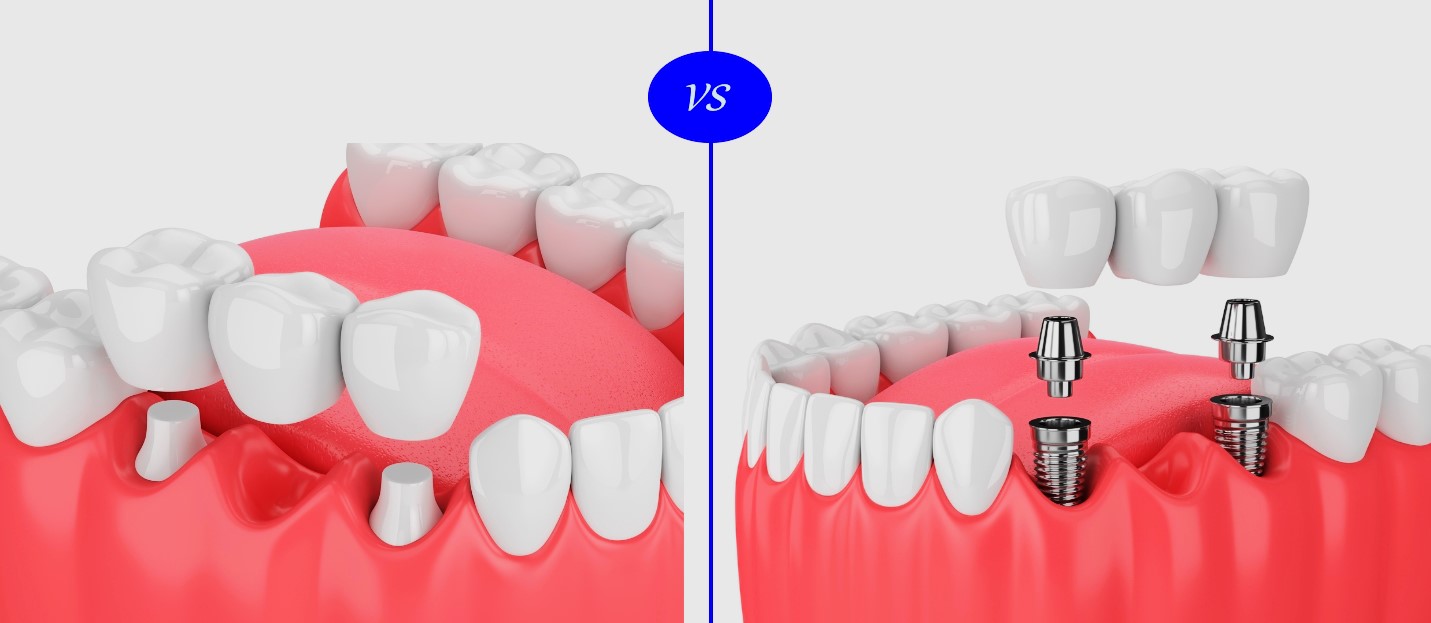
What Is the Real Difference Between Dental Implants and Dental Bridges?
At first glance, both treatments replace a missing tooth.
But biologically, they function in completely different ways.
Understanding that difference is where clarity begins.
How a Dental Implant Replaces a Missing Tooth (Root + Crown Concept)
Imagine replacing a tree in your garden.
You wouldn’t glue a new trunk onto nearby trees.
You would plant a new root in the soil.
That is essentially what a dental implant does.
A dental implant consists of:
- Titanium implant fixture placed into the jawbone
- Abutment connector
- Custom dental crown
The titanium root integrates with bone through a biological process called osseointegration.
Once healed, the implant functions very much like a natural tooth root.
This means:
- Chewing forces are transferred to the bone
- Surrounding teeth remain untouched
- Bone density is preserved
How a Dental Bridge Restores a Missing Tooth Using Neighboring Teeth
A dental bridge solves the same cosmetic problem but uses a different strategy.
Instead of creating a new root, the dentist uses adjacent teeth as anchors.
The process typically involves:
- Reshaping the neighboring teeth
- Placing crowns on those teeth
- Attaching a false tooth (pontic) between them
Think of it like building a small bridge across a gap, supported by two pillars.
For certain situations, this can be a practical and efficient solution.
Why These Two Treatments Are Biologically and Structurally Different
Here is the core difference many patients never hear explained clearly:
A dental implant is independent.
A dental bridge is dependent on other teeth.
This difference affects:
- Long-term durability
- Bone preservation
- Maintenance complexity
- Risk to neighboring teeth
That structural independence is one reason implants have become the modern standard of care in many cases.
Which Option Mimics Natural Teeth More Closely?
From a biological standpoint, implants replicate the natural tooth structure most closely.
Natural tooth structure includes:
- Root embedded in bone
- Ligament and bone stimulation
- Individual load distribution
Because implants restore the root–crown system, they often provide the closest functional equivalent to a real tooth.
But treatment decisions are rarely one-size-fits-all.
Next, let’s explore when dentists recommend each option.
When Do Dentists in Antwerp Recommend Dental Implants Instead of Bridges?
Patients often assume dentists simply recommend the more advanced treatment.
In reality, ethical dentistry focuses on what best fits the patient’s anatomy, health, and goals.
Ideal Candidates for Dental Implants
Dental implants are usually recommended when patients:
- Have sufficient jawbone density
- Maintain good oral hygiene
- Want a long-term independent tooth replacement
They are particularly beneficial when adjacent teeth are healthy, because implants avoid unnecessary tooth preparation.
Situations Where Dental Bridges May Be the Better Option
Bridges can be an excellent solution when:
- Neighboring teeth already require crowns
- Bone volume is insufficient for implants
- A patient prefers a faster treatment timeline
In these cases, a bridge can restore function efficiently and predictably.
What Happens If the Neighboring Teeth Are Completely Healthy?
This is one of the most important decision points.
Preparing a bridge requires removing enamel from adjacent teeth to place crowns.
If those teeth are perfectly healthy, many clinicians consider implant treatment more conservative long term.
Can Bone Loss Affect the Decision?
Yes.
After tooth loss, the jawbone gradually shrinks because it no longer receives stimulation from a tooth root.
If significant bone loss has already occurred, treatment may involve:
- Bone grafting
- Alternative implant techniques
Is Age a Limiting Factor for Dental Implants?
This is a common patient question.
Age alone is rarely a limitation.
We have successfully placed implants in patients in their 70s and even 80s.
What matters more is:
- General health
- Bone quality
- Healing ability
But longevity is where the difference between these treatments becomes especially clear.
Longevity Comparison: Which Option Lasts Longer in Real Clinical Practice?
Patients often ask:
“Which solution will I still have in 20 years?”
This question shifts the decision from short-term repair to long-term stability.
Average Lifespan of Dental Implants
Clinical studies consistently show high success rates.
Many implants last 20–30 years or longer with proper care.
In many cases, the implant itself can last a lifetime while the crown may need replacement after many years.
Average Lifespan of Dental Bridges
Dental bridges typically last 10–15 years before replacement becomes necessary.
The most common reason is decay or structural problems in the supporting teeth.
What Causes Implants or Bridges to Fail?
For implants:
- Poor oral hygiene
- Smoking
- Uncontrolled diabetes
- Peri-implantitis (gum inflammation)
For bridges:
- Decay under crowns
- Fracture of supporting teeth
- Gum recession
How Oral Hygiene Affects Long-Term Survival
Both options require excellent hygiene.
Patients should maintain:
- Daily brushing
- Interdental cleaning
- Regular professional checkups
Small habits dramatically influence long-term success.
What the Clinical Studies and Long-Term Data Show
Modern implant dentistry shows success rates above 95% in many studies.
However, the key variable is care and maintenance, not just the procedure itself.
Next, let’s address one of the biggest fears patients express.
Pain.
Does Getting a Dental Implant Hurt More Than a Dental Bridge?
Fear of pain often delays treatment for months—or even years.
The reality of modern dentistry is very different from what many patients imagine.
Pain Levels During Dental Implant Surgery
Implant surgery is performed under local anesthesia.
Most patients report feeling pressure but not pain during the procedure.
After surgery, discomfort is usually described as mild to moderate, similar to a tooth extraction.
Pain During Tooth Preparation for a Bridge
Preparing teeth for a bridge also requires anesthesia.
Because enamel must be reshaped, some patients experience temporary sensitivity afterward.
Recovery Time Comparison
Typical recovery expectations:
Implant surgery
- Mild swelling for a few days
- Normal activity usually within 24 hours
Bridge preparation
- Minimal downtime
- Temporary sensitivity possible
How Modern Anesthesia and Digital Surgery Reduce Discomfort
Advanced diagnostics and guided surgery now allow:
- Precise implant placement
- Shorter procedures
- Less tissue trauma
The result is often much easier recovery than patients expect.
But another question inevitably follows.
What about the cost?
Cost Comparison in Antwerp: Dental Implants vs Dental Bridges
Financial decisions naturally trigger caution.
The brain tries to evaluate value vs risk.
Understanding the long-term perspective helps clarify this.
Average Cost of a Dental Implant in Belgium
A single dental implant with crown typically ranges between:
€1,800 – €3,000
This varies depending on diagnostics, bone grafting, and materials used.
Average Cost of a Dental Bridge in Antwerp
A 3-unit dental bridge typically ranges between:
€1,500 – €2,500
Initial costs are often slightly lower.
Why Implants Usually Cost More Initially
Implant treatment includes:
- Surgical placement
- Precision planning
- Implant materials
- Custom crown fabrication
However, it also replaces the entire tooth structure.
Long-Term Financial Perspective: Replacement vs Durability
One important question patients rarely consider:
How many times will this treatment need replacement?
Bridges may require replacement after 10–15 years.
Implants often last significantly longer.
Over decades, the total cost difference can narrow.
How Each Option Affects Your Natural Teeth and Jawbone
Beyond cost and durability lies an even deeper factor: biological health.
Do Dental Bridges Damage Neighboring Teeth?
Bridges require reshaping adjacent teeth to support crowns.
This does not damage them when done properly—but it does permanently alter them.
How Dental Implants Help Preserve Jawbone Density
Implants transmit chewing forces into the jawbone.
This stimulation helps maintain bone density and facial structure.
What Happens to the Bone After Tooth Loss
Without stimulation from a tooth root, the jawbone begins to gradually resorb.
Over years, this can influence:
- Facial contours
- Gum shape
- Implant placement difficulty
Long-Term Impact on Facial Structure and Bite Stability
Bone preservation plays a role in maintaining:
- Facial support
- Bite alignment
- Chewing balance
These factors become increasingly important over time.
Aesthetic Results: Which Looks More Natural?
Patients rarely want a restoration that merely functions.
They want something that feels invisible.
How Implant Crowns Mimic Natural Teeth
Implant crowns emerge naturally from the gum, similar to a real tooth.
This often produces highly natural aesthetics.
Can Bridges Look Just as Natural?
Yes.
Modern ceramic bridges can achieve excellent aesthetics when designed carefully.
Gum Line Stability Over Time
Because implants maintain bone levels, gum contours often remain more stable over years.
Smile Design Considerations
Aesthetic outcomes depend on:
- Gum architecture
- Tooth shape and color
- Digital smile planning
Treatment Timeline: How Long Does Each Procedure Take?
Time matters—especially for busy professionals.
Typical Timeline for Dental Implants
Typical stages:
- Implant placement
- Healing period (3–4 months)
- Crown placement
Timeline for Dental Bridges
A bridge can usually be completed in 2–3 appointments over several weeks.
Can Implants Be Placed Immediately After Extraction?
In some cases, yes.
Immediate implant placement may reduce overall treatment time.
When Same-Day Teeth May Be Possible
Advanced protocols allow temporary teeth on implants the same day for selected patients.
Implant vs Bridge Decision Framework: How Dentists Evaluate the Best Option
Every treatment plan begins with a detailed evaluation.
Bone Volume and Bone Quality
3D imaging allows precise assessment of implant feasibility.
Health of Adjacent Teeth
If neighboring teeth require crowns, bridges may become more logical.
Bite Forces and Occlusion
Strong bite forces may influence material selection and treatment type.
Patient Lifestyle and Oral Hygiene
Daily habits strongly influence long-term success.
Budget and Long-Term Expectations
Our goal is not simply to fix a tooth.
It is to help patients choose the solution they will still feel confident about years later.
Dental Implants and Bridges in Antwerp: Expert Care at VIDENT Dental Clinic
Choosing between implants and bridges should never feel like guessing.
It should feel like making a well-informed decision with expert guidance.
Advanced Diagnostics and Digital Planning
At VIDENT Dental Clinic we use:
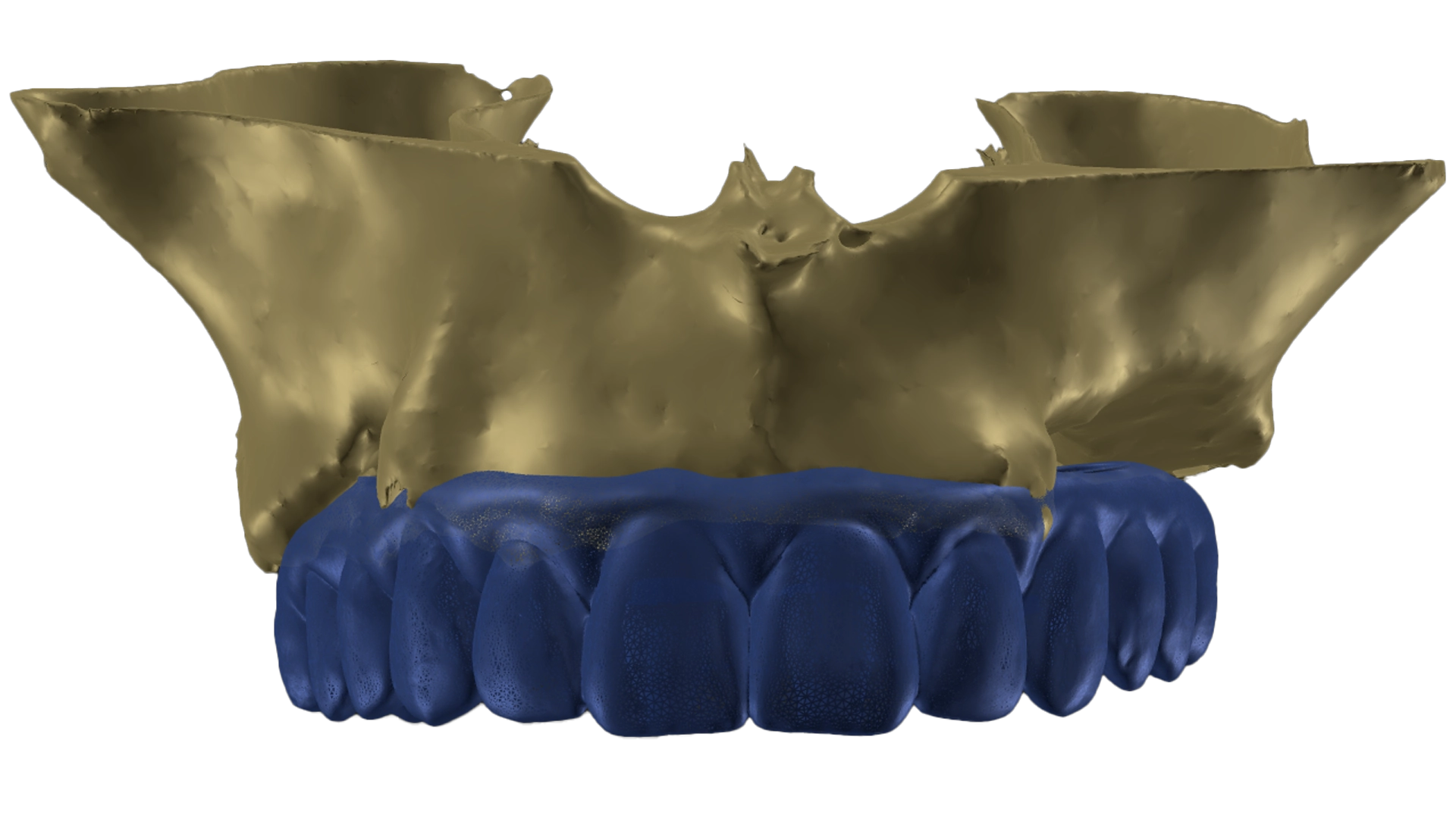
- 3D CBCT imaging
- Digital smile design
- Guided implant surgery
These tools allow precise planning before treatment even begins.
Booking a Consultation in Antwerp
The most valuable step is a personalized consultation.
During this visit we evaluate:
- Bone health
- Tooth condition
- Aesthetic goals
- Long-term treatment strategy
Then we present the clearest path forward.
Where I walked in months ago with fear was completely gone in a few minutes. Very good dentist gives good explanations and knows his trade. I am now being treated for 2 implants and everything is perfect. Highly recommended.

Ready to discover which tooth replacement is right for you?
Book your personalized implant & bridge consultation at VIDENT Dental Clinic in Antwerp today.
📞 Call VIDENT Dental Clinic for a consultation — +32 468 42 86 77Frequently Asked Questions
Are dental implants really worth the higher cost compared to bridges?
Yes — when you look beyond the initial invoice.
Implants preserve bone, keep neighboring teeth intact, and can last 20–30 years or longer with good care.
A bridge might cost less today, but after one or two replacements, total spending often becomes higher.
Think of it as investing once in stability rather than renting a solution every decade.
Do dental implants feel exactly like natural teeth?
Almost.
Implants are anchored directly into the jawbone, stimulating bone just like natural roots.
After healing, most patients describe them as “completely natural,” forgetting which tooth was replaced.
This sensory integration is one reason they’ve become the gold standard for tooth replacement.
What if I’m afraid of surgery or pain — are implants still an option?
Absolutely.
Modern implant surgery is minimally invasive and performed under local anesthesia or conscious sedation.
Most patients return to normal activity within 24 hours.
If dental anxiety is an issue, VIDENT’s team can use guided digital surgery and anxiety-reduction protocols to make the experience calm and predictable.
Can a dental bridge be done if I have receding gums or mild bone loss?
It depends on severity.
Mild bone or gum recession may still allow for a well-fitted bridge, but progressive bone loss can lead to poor fit and food entrapment over time.
Implants, by contrast, stimulate the bone, slowing or stopping further resorption.
A digital 3D scan during consultation clarifies which option is biologically safer for you.
How long after tooth extraction can I get a dental implant?
In many cases, immediately.
If bone and gums are healthy, an implant can be placed the same day as extraction (“immediate implant placement”).
When bone is thin or infected, a healing period of 3–4 months or bone grafting may be required before implantation.
Are dental implants safe for older adults?
Yes — age itself is not a contraindication.
Clinical studies show high success even in patients over 75.
Overall health, bone density, and medication use matter more than age.
Many of our senior patients choose implants precisely because they want a final, stable solution after years of removable dentures.
What maintenance does each option require long term?
Implants and bridges both need consistent hygiene:
- Brush twice daily
- Clean around the implant or under the bridge using interdental tools
- Schedule regular professional checkups
The difference: implants require more focus on gum health to prevent peri-implantitis, while bridges need vigilance for decay on supporting teeth.
What happens if an implant fails — can it be replaced?
Yes.
If an implant fails early (rarely), it’s usually due to infection or poor integration.
In most cases, once the site heals, a new implant can be placed successfully.
Proper diagnostics and maintenance reduce the chance of failure to below 5%.
Will people notice that I have a dental bridge or implant when I smile?
With proper design, no.
Modern ceramic materials are indistinguishable from natural enamel in both color and light reflection.
Implants often achieve slightly better gum contour stability over time, preventing gaps or dark lines near the gum.
Aesthetic photography and digital smile design make all the difference.
Can I switch from a dental bridge to an implant later?
Yes — but it may require additional planning.
If a bridge has been in place for years, bone underneath may have resorbed slightly.
A bone graft can often rebuild the area before implant placement, allowing a full transition to an independent tooth replacement.