

Porcelain Veneers are not the right solution for everyone who simply wants a quick cosmetic change — but they may be the most beautiful and long-lasting aesthetic solution ever created for your smile.
The goal of this guide is simple: help you understand how long dental veneers truly last, what shortens their lifespan, and why VIDENT Antwerp veneers stay stable for years.
Quick Answer you Are Looking For
- Lifespan: Most dental veneers last 10–20 years when designed and bonded correctly.
- Porcelain veneers: typically 12–20 years
- Composite veneers: usually 5–8 years
- Key insight: Bruxism (grinding) is the #1 reason veneers fail early. Most failures happen during bonding, not years later.
- The VIDENT Difference: Veneers are planned through a structured diagnostic and digital workflow, allowing patients to preview their smile and dramatically increasing longevity.
The key word is expected. Longevity depends heavily on material quality, tooth preparation, bite balance, bonding technique, and patient habits.
Wondering how long your veneers will really last in your specific case?
Schedule your personal diagnostic smile consultation at VIDENT Antwerp — no commitment, just clarity and a preview of your future smile.
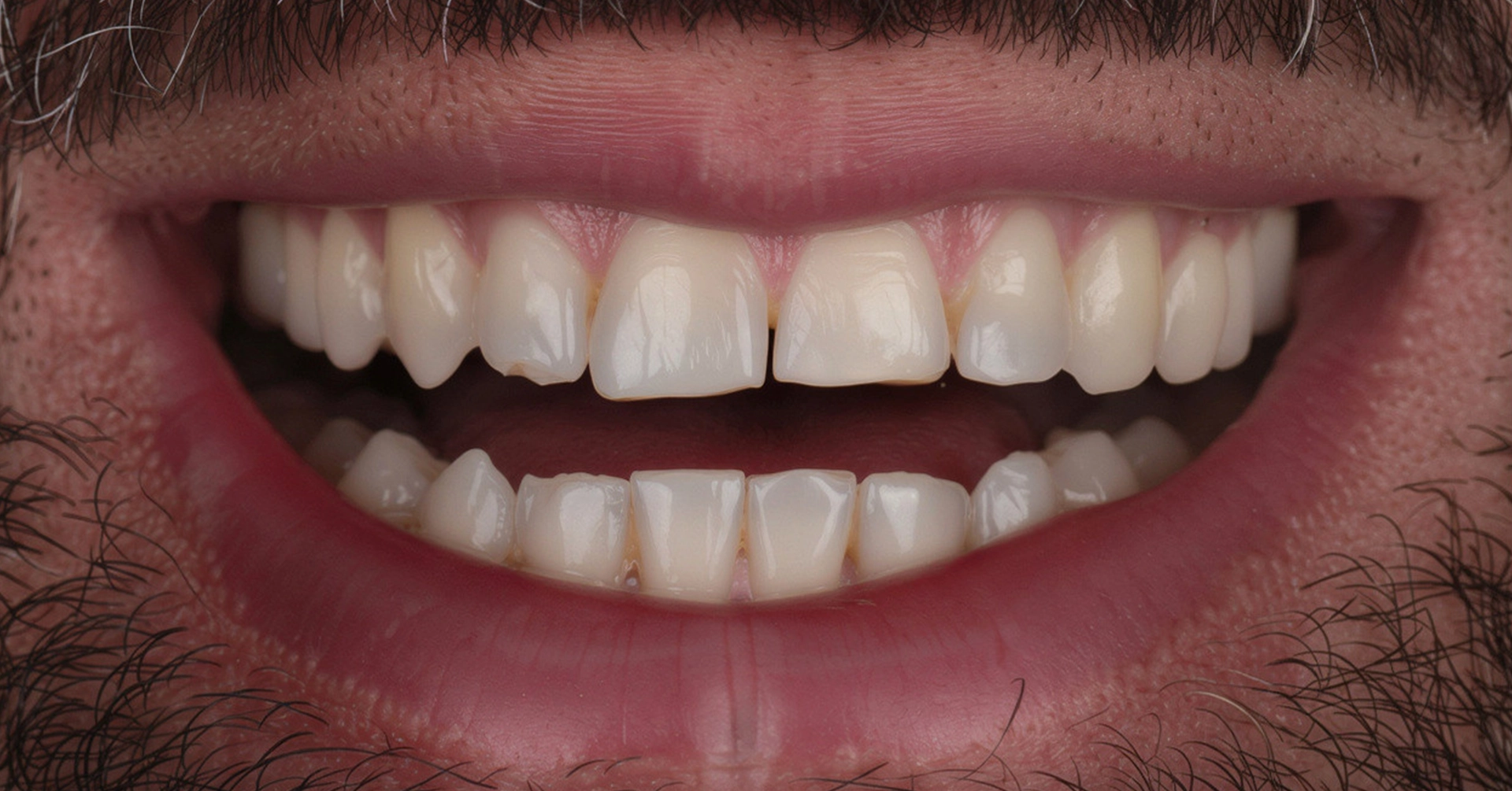
Before
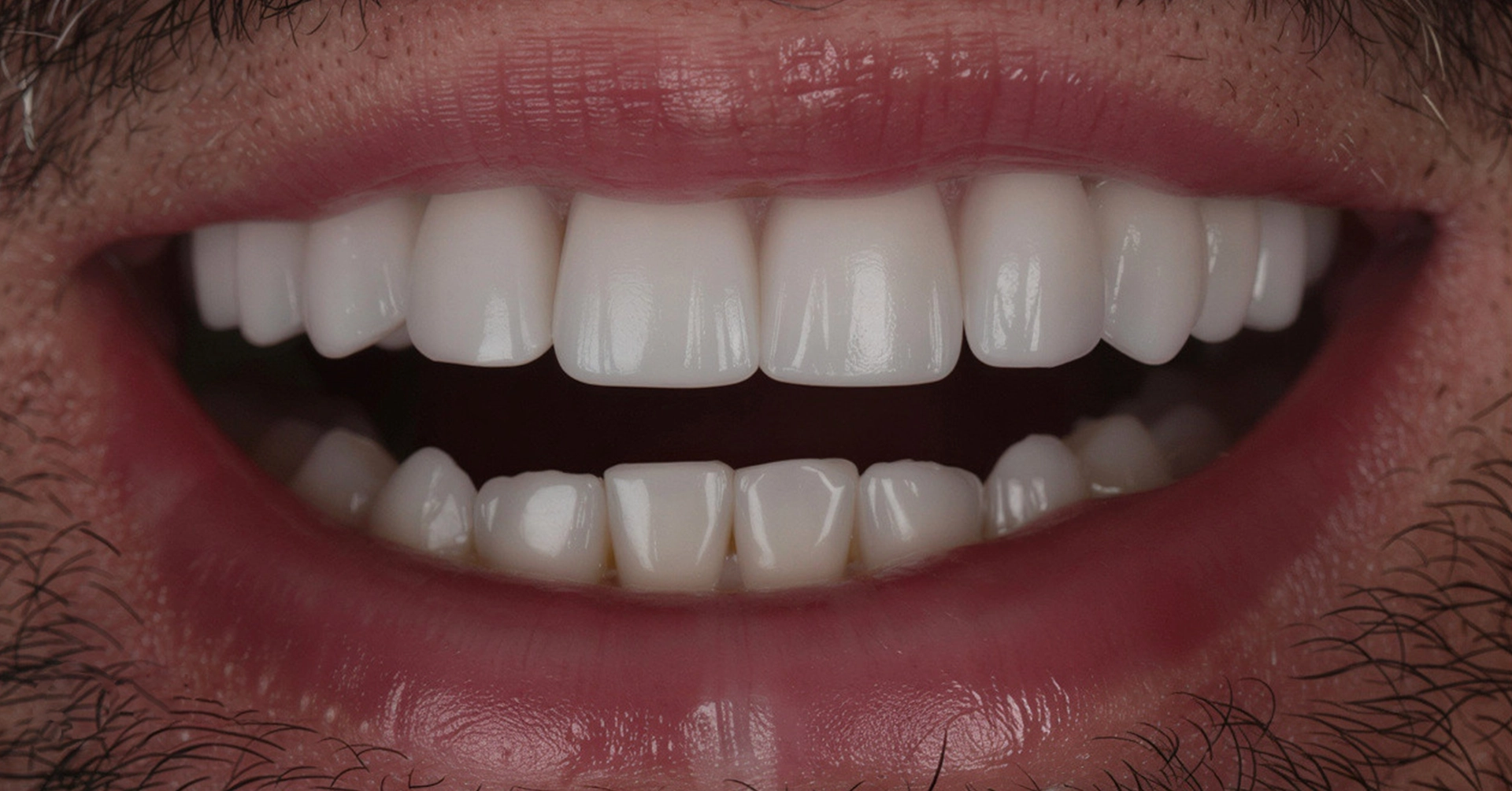
After 6 Years Follow-up
Dental Veneers Lifespan: How Long They Really Last, What Shortens It
Patients in Antwerp often encounter two extreme claims online: “Veneers last forever.” or “Veneers must be replaced every 5 years.” Both are misleading.
Dental veneers are thin ceramic or composite shells bonded to the front of teeth to improve color, shape, alignment, and symmetry. Like any medical restoration, they have an expected clinical lifespan.
The key word is expected. Because longevity depends heavily on how they are designed and bonded.
On Average, How Long Do Dental Veneers Really Last?
Porcelain veneers
- Average lifespan: 12–20 years
- Survival rates after 10 years: 90–95%
Composite veneers
- Average lifespan: 5–8 years
- More prone to staining and wear
Why the difference? Porcelain (often lithium disilicate ceramics like IPS e.max) is stronger, more stain-resistant, and structurally stable compared with resin composites.
What Actually Determines the Lifespan of Veneers? (Not What Instagram Says)
Scrolling through social media, veneers often look like a quick cosmetic upgrade. But in reality, veneers behave more like micro-engineered structures bonded to living teeth.
Their success depends on three foundational pillars:
- Material selection
- Tooth preparation
- Adhesive bonding protocol
Veneer Material: Porcelain vs Composite (Durability Compared)
Porcelain veneers advantages: Highly resistant to staining, exceptional color stability, stronger structural integrity, natural light reflection similar to enamel.
Limitations: Higher laboratory cost, requires precise bonding.
Composite veneers advantages: Lower initial cost, can often be completed in one visit, easier repairs.
Limitations: Stains more easily, wears faster, shorter lifespan.
Tooth Preparation: How Much Is Too Much?
Modern veneer dentistry aims for minimal preparation, preserving as much natural enamel as possible. Enamel provides the strongest bonding surface in dentistry.
Bonding Protocols: The Most Underrated Factor in Veneer Longevity
Bonding involves multiple precise steps under strict isolation. A veneer bonded perfectly today can remain stable for decades.
What Shortens the Lifespan of Veneers? (And How to Avoid It)
Most veneer complications arise from three identifiable factors:
- grinding forces
- bite imbalance
- maintenance habits
Bruxism (Teeth Grinding): Silent Veneer Killer?
Most veneer patients who grind receive a custom night guard, which redistributes forces and protects restorations during sleep.
Bite Problems & Misalignment Before Veneers
Comprehensive clinics evaluate occlusion, jaw movement patterns, and contact points between teeth. Sometimes minor orthodontic adjustments are recommended before veneers.
Oral Hygiene & Maintenance: What Patients Underestimate
Veneers themselves do not decay. But the natural tooth underneath still can. Maintaining veneers is surprisingly simple: brush twice daily, floss regularly, professional cleaning every 6 months, avoid opening packages with teeth.
Why Veneers at VIDENT Clinic in Antwerp Last Longer
At VIDENT Clinic, veneers are treated as a structured clinical system, not a cosmetic shortcut. The goal is simple: reduce uncertainty at every stage before the final veneers are bonded.
Instead of starting with drilling or impressions, treatment begins with understanding the patient’s goals, facial proportions, and bite. This diagnostic stage helps patients visualize the outcome before committing.
Diagnostic first consultations and documented decisions
High-resolution photography and digital scans allow precise planning. Patients see the reasoning behind each decision.
Smile design patients can evaluate before treatment
Using digital smile design and mock-ups, patients can preview their new smile. This stage activates a powerful psychological shift.
Precision Dentistry: Digital Workflows & European Ceramics
VIDENT Clinic uses digital workflows and certified dental ceramics such as lithium disilicate (IPS e.max) that meet strict European medical standards.
Controlled Bonding & Final Verification
Bonding is performed under strict isolation. Before patients leave, dentists verify bite balance, veneer margin smoothness, polish quality, and gum response.
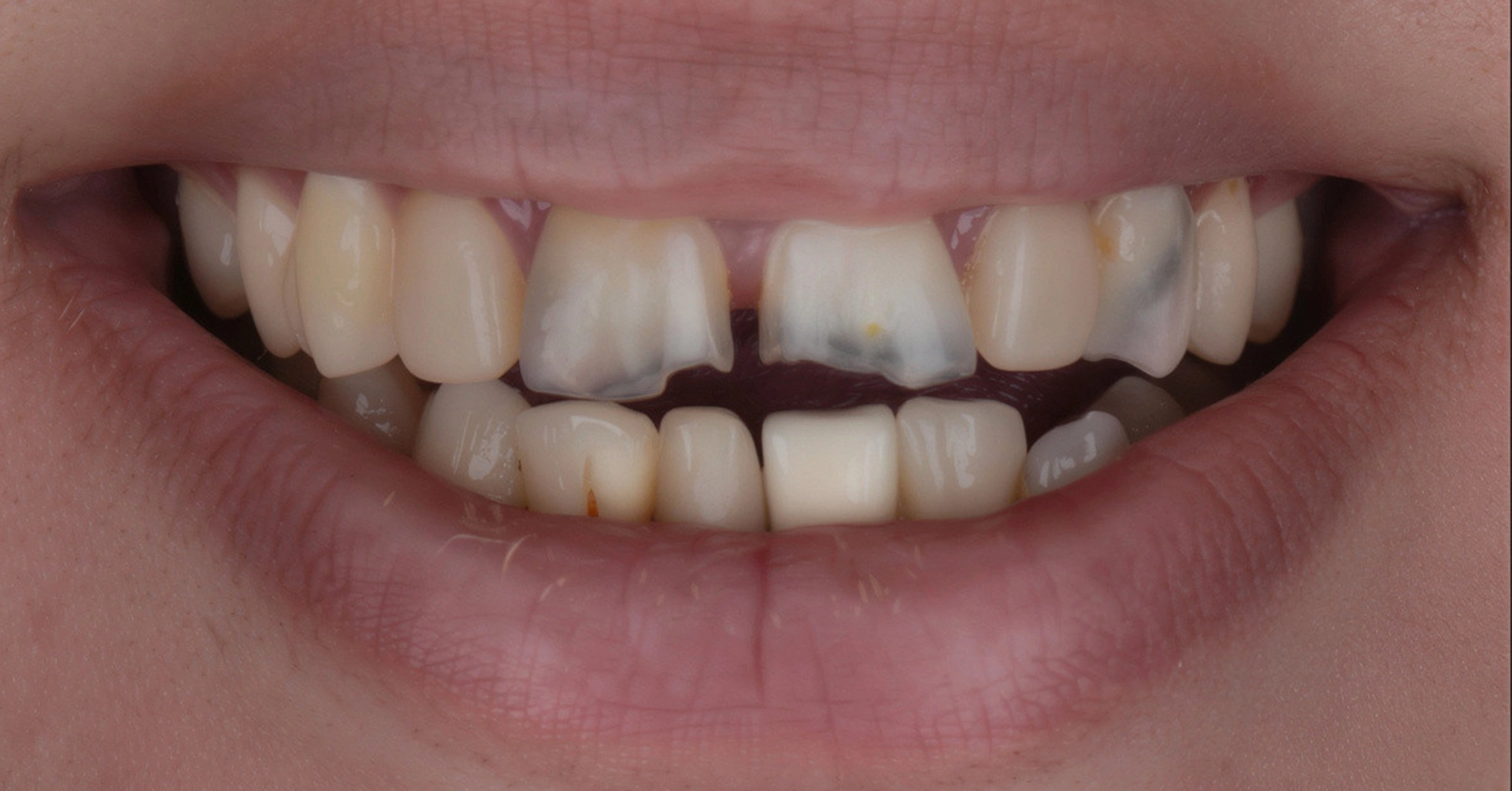
Before
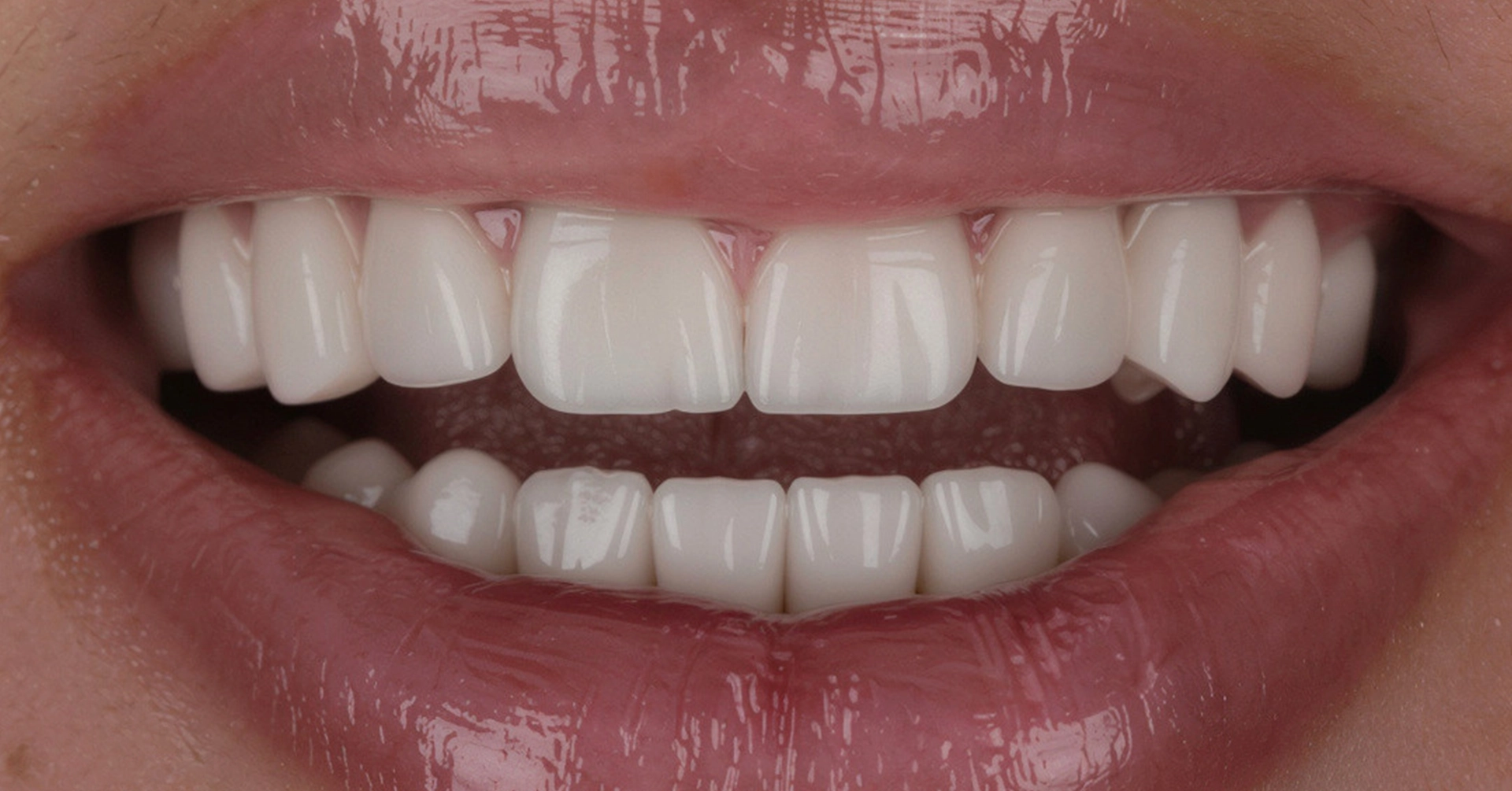
After 6 Years Follow-up
Ready to preview your new smile that lasts?
Let our experienced team analyze your smile, design it digitally, and explain every step before any treatment begins.
VIDENT Clinic Antwerp
Address: Maantjessteenweg 160, 2170 Antwerpen
Email: info@vident-clinic.be
Phone: +32 468 42 86 77 | 03 646 10 28
Working Hours
- Monday – Friday: 09:00 – 18:00
- Saturday: 10:00 – 17:00
Schedule a diagnostic smile consultation at VIDENT Clinic in Antwerp, where your smile is analyzed, designed, and explained before any treatment begins.
Frequently Asked Questions
1. Will I need to replace my veneers every 10 years?
While the industry “average” is often cited as 10 years, this is a clinical benchmark, not a deadline. In our precision-driven workflow at VIDENT, we aim for 15 to 20+ years. Longevity is less about the material and more about the accuracy of the bond to your enamel. If the seal remains intact and your bite is balanced, there is no biological reason for a veneer to “expire” at a specific date.
2. Is the tooth preparation reversible, or will it damage my natural teeth forever?
This is the most common fear. Modern veneers at our Antwerp clinic use minimally invasive or “No-Prep” protocols. We typically remove only 0.3mm to 0.5mm of enamel—roughly the thickness of a contact lens. While the process is generally irreversible because enamel doesn’t grow back, our goal is to preserve the structural integrity of your tooth, not compromise it.
3. Will my teeth become permanently sensitive after getting veneers?
Post-operative sensitivity is usually a sign of poor temporary restorations or an unbalanced bite. Because we use Digital Occlusion analysis, we ensure the veneers don’t interfere with your natural jaw movement. By preserving the majority of your natural enamel during preparation, any minor sensitivity usually fades within a few days.
4. What happens if a veneer chips or falls off? Is it a dental emergency?
While rare with high-grade Lithium Disilicate (IPS e.max), a chip is rarely a medical emergency, but it is an aesthetic one. Most “de-bonding” issues happen because the veneer was bonded to dentin instead of enamel, or because of undiagnosed nighttime grinding (Bruxism). If a veneer fails, we analyze why it failed to ensure the replacement lasts for the long term.
5. Do porcelain veneers stain over time if I drink coffee, tea, or red wine?
One of the advantages of high-quality European ceramics is their non-porous surface. Unlike natural enamel or composite resin, high-glazed porcelain is chemically inert. It cannot absorb pigments from food or drink. While the cement at the very edge might slightly darken over a decade, the veneer itself will stay as bright as the day it was bonded.
6. Why is there such a massive price difference between “Turkey Teeth” and precision veneers in Antwerp?
This is a classic Value vs. Price dilemma. Lower-cost “smile makeovers” often rely on aggressive tooth reduction and generic lab work. At VIDENT, you are investing in a Diagnostic Clinical System. We use individualized layering, European-certified materials, and a digital workflow that prevents the biological cost of losing healthy tooth structure.
7. How do receding gums affect the look of my veneers as I age?
The veneers won’t move, but your gum line might due to natural aging or aggressive brushing. This is why we use supra-gingival or equigingival margins whenever possible. By mimicking the natural emergence profile of a tooth, we ensure that even if minor recession occurs years later, the transition remains natural.
8. What if I don’t like the “Final Look” once they are bonded?
We eliminate the fear of regret through our “Test Drive” phase. Before the final porcelain is even ordered, you wear a trial smile (mock-up) made of temporary resin. You can live with it, speak with it, and see it in different lighting. We do not move to final porcelain until you have physically and emotionally “vetted” your new look. There are no surprises at the final appointment.