

Quick answer: Full mouth dental implants are generally the more stable, longer-lasting option because they preserve jawbone and function like natural tooth roots, while traditional dentures cost less upfront but can slip, limit your diet, and allow the jawbone to shrink over time. The right choice depends on your bone health, budget, and lifestyle — this guide breaks down every factor so you can decide with confidence.
Dentures can restore appearance, but may slip, limit food choices, and do not stimulate the jawbone.
Full mouth dental implants support a fixed new smile that feels stable, helps preserve bone, and can improve daily confidence.
Modern imaging, planning, bone grafting, and alternative implant techniques create options for many people.
VIDENT uses digital treatment planning for precision, comfort, and predictable results.
The best choice depends on your health, jawbone, goals, and budget. A VIDENT consultation gives you a clear, personal plan before you decide.
Keep reading to understand exactly what happens to your mouth after tooth loss, how dentures and full mouth implants really compare day to day, and how VIDENT in Antwerp helps you choose with zero pressure and zero guesswork.
Ready to Replace Your Missing Teeth with Confidence?
Book a Complimentary Consultation at VIDENT Antwerp. Let our experienced specialists evaluate your unique case and map out a precise, worry-free path tailored just for you.
See a Real VIDENT Patient Transformation
Numbers and explanations only tell part of the story. Drag the slider below to see a real before-and-after result from a VIDENT patient in Antwerp who moved from missing or failing teeth to a confident, natural-looking smile with implant-supported treatment.
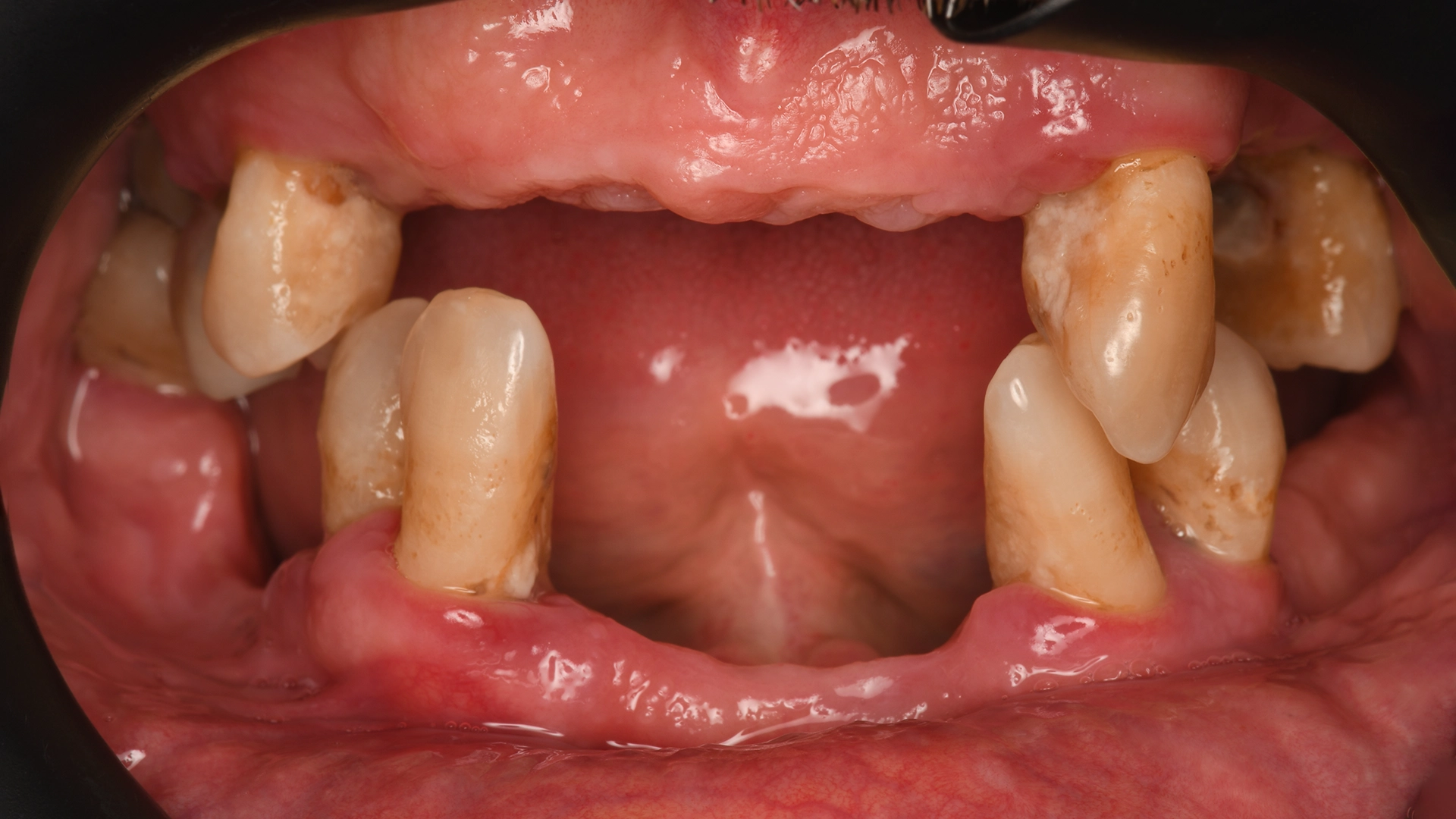
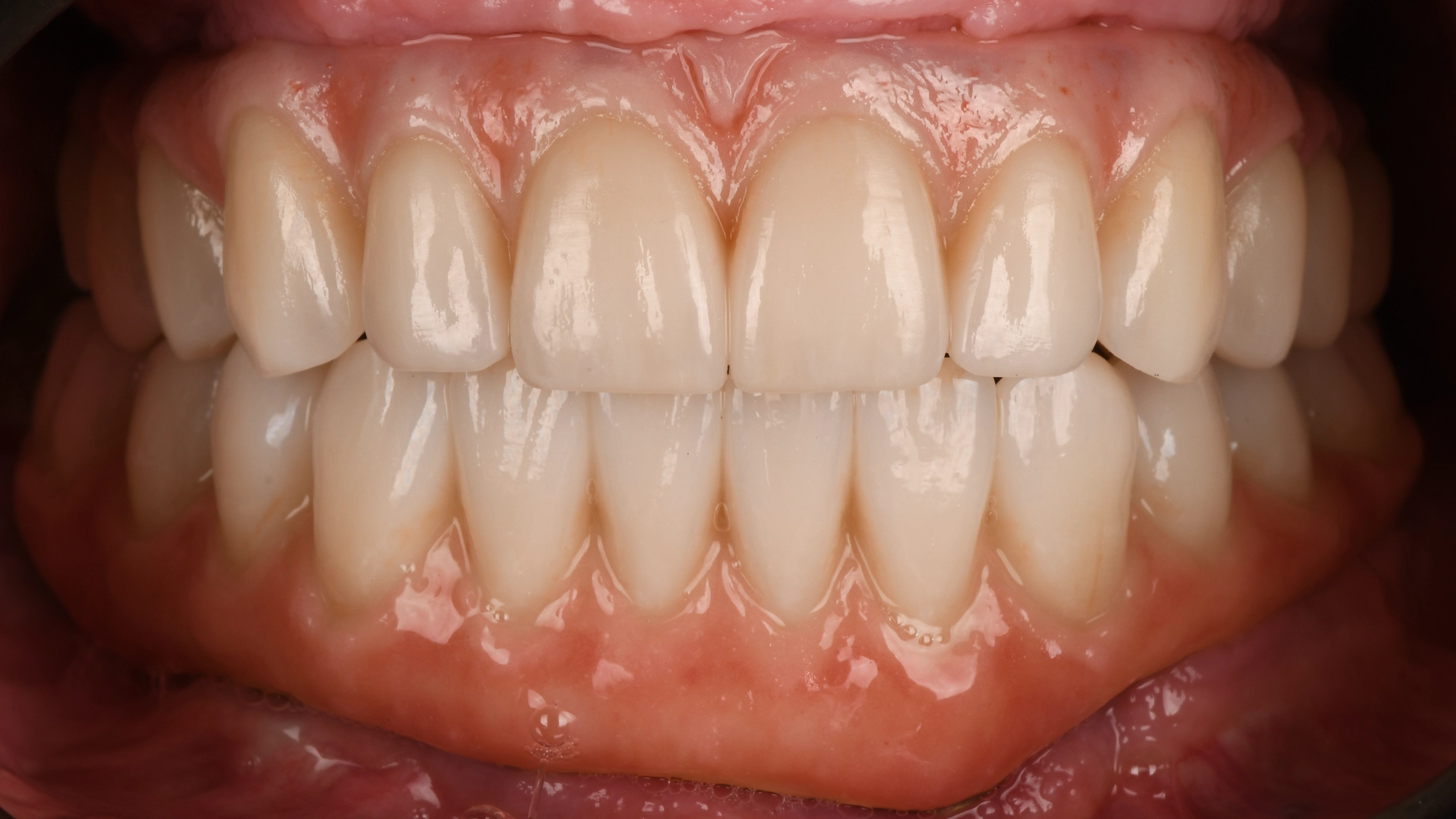
Full mouth implant result – VIDENT Antwerp
The Hidden Truth About Traditional Dentures (What They Don’t Tell You)
Dentures can be an appropriate option for some people, especially when a removable solution is preferred or needed. Yet many people only discover the trade-offs after they start wearing them.
A denture replaces visible teeth. It does not replace the tooth roots that once transferred chewing pressure into your jawbone. That difference matters over time.
Bone Loss and the “Sunken Face” Effect
After teeth are lost, the jawbone can gradually shrink because it no longer receives normal stimulation from tooth roots. This process is called bone resorption.
As the bone changes, a denture may become looser and need relining or replacement. In some cases, reduced facial support can contribute to a more hollow or “sunken” appearance around the lips and cheeks.
That brings us to the daily realities that often cause people to seek a more stable option.
The Daily Frustrations: Messy Glues, Slips, and Diet Restrictions
A removable denture can move during speech or chewing. Adhesive may help, but many people dislike the routine of applying it, cleaning it away, and worrying whether it will hold.
Common concerns include:
- Avoiding crunchy bread, apples, steak, nuts, or chewy foods
- Covering the mouth while laughing or speaking
- Sore spots caused by rubbing
- Removing teeth at night for cleaning
- Feeling uncertain during an important meal or meeting
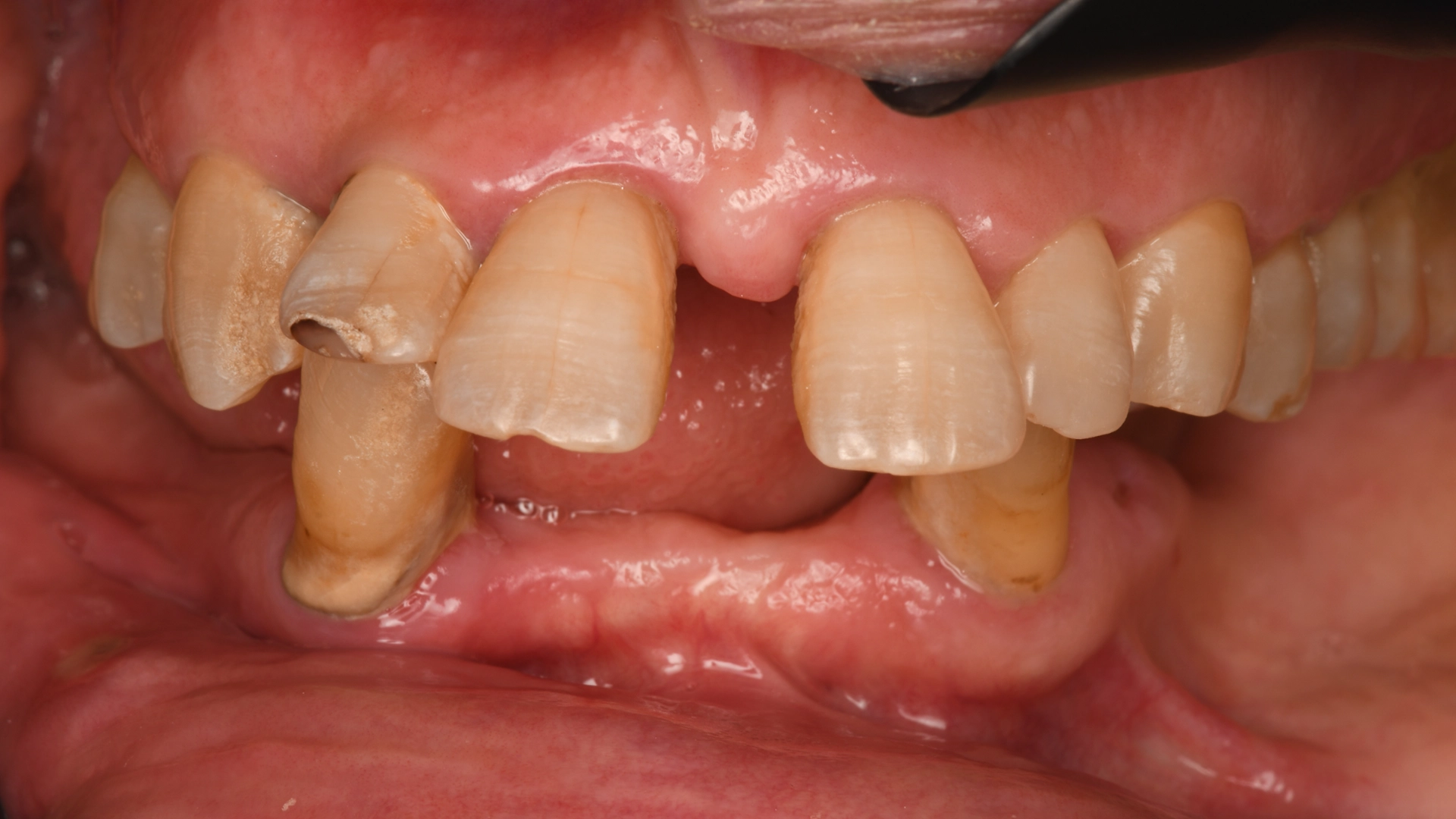
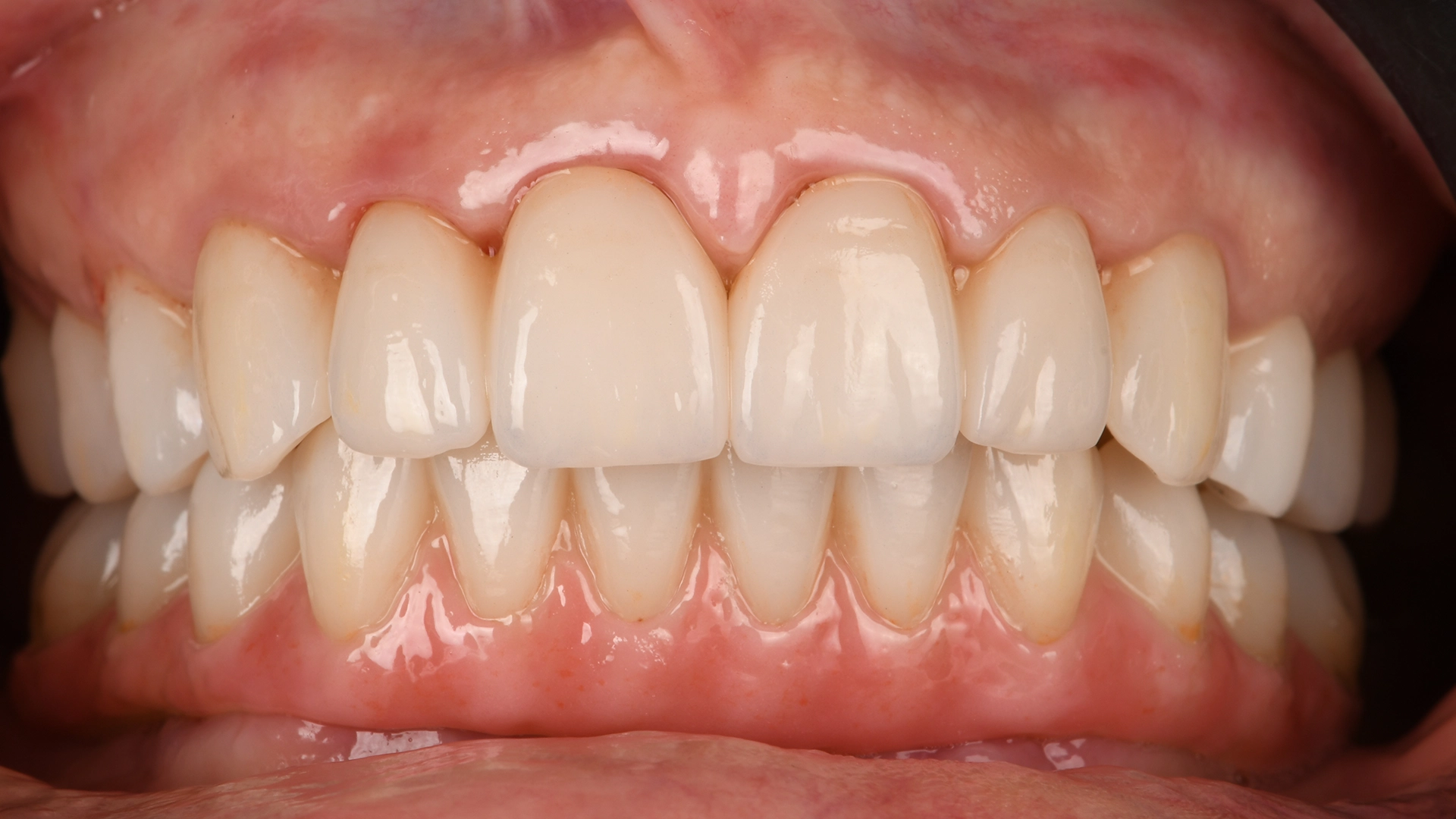
Full mouth implant result – VIDENT Antwerp
These are not minor inconveniences. They can quietly reduce spontaneity. A stable smile changes the mental calculation from “Will this work?” to “I can simply enjoy this.”
Full Mouth Dental Implants: The Permanent Solution for a Natural Smile
Full mouth dental implants are a fixed tooth-replacement solution. They use dental implants, usually titanium fixtures placed in the jaw, to secure a custom full arch of teeth.
Unlike a removable denture, the restoration is firmly connected to the implants. Your clinical team plans the result around your bite, facial support, speech, and smile goals.
What Are All-on-4 and All-on-6 Implants? (Explained Simply)
All-on-4 and All-on-6 are full-arch treatment concepts. A full bridge of replacement teeth is supported by four or six carefully positioned implants.
The number is not a quality score. It is a clinical decision based on bone volume, bite forces, anatomy, and long-term stability. During digital planning, VIDENT can assess which approach is most suitable for your mouth.
For some people, temporary fixed teeth may be possible during the healing phase. Your dentist will explain what is safe and realistic in your case, rather than promising a one-size-fits-all outcome.
How All-on-4 Full Mouth Implants Work
Four strategically angled implants are placed to support a complete, fixed arch of teeth — often avoiding the need for extensive bone grafting in suitable cases. The result is a full-arch restoration engineered around your bite, facial support, and long-term stability.
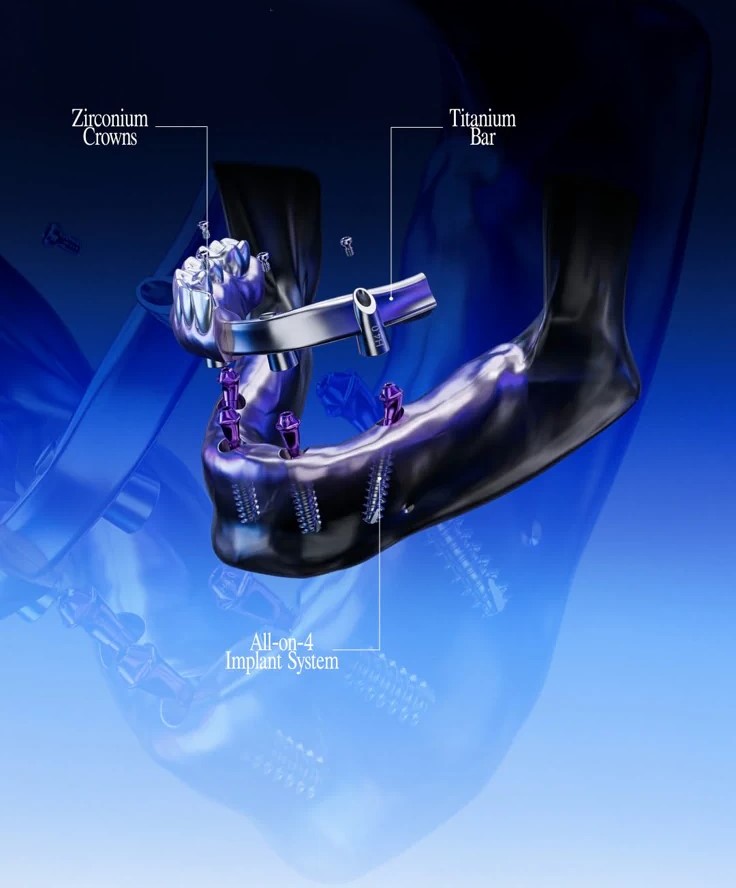
All-on-4 full mouth implant concept – VIDENT Antwerp
Eat Apples, Steak, and Smile with 100% Confidence Again
The goal of full mouth implant treatment is not just stronger chewing. It is freedom from hesitation.
Picture sitting down to dinner with friends, choosing from the menu without scanning for soft foods, then smiling in a photo without checking whether anything has shifted. That confidence can be deeply meaningful.
Implant-supported teeth still need care. You will brush, clean around the implants with the tools recommended by your dental team, and attend regular reviews. The routine is simple, but it protects a major long-term investment.
5 Reasons Patients Choose Full Mouth Implants Over Dentures
Fixed & Stable
No slipping while speaking, laughing, or eating in public.
Preserves Jawbone
Implant posts stimulate bone the way natural roots once did.
Eat Almost Anything Again
Apples, steak, and nuts return to the menu without hesitation.
Digital Precision Planning
3D CBCT imaging and guided surgery reduce surprises and risk.
Better Long-Term Value
Fewer relines, adjustments, and replacements over the years.
Dentures vs. Implants: The Ultimate Comparison for Antwerp Patients
Both options can replace missing teeth. The key difference is whether you want a removable appliance resting on the gums or a fixed restoration supported by implants.
Upfront Cost vs. Long-Term Investment (Which Is Cheaper in the Long Run?)
A full mouth implant solution has a higher upfront cost than conventional dentures. This is understandable because it includes diagnostic imaging, surgical planning, implant placement, custom prosthetic work, and follow-up care.
For context, a full mouth restoration can involve several clinical stages and specialist expertise. At VIDENT, individual implant treatment commonly falls within a transparent €2,500 to €3,100 range, while full-arch treatment requires a personalised quote after assessment. Flexible payment options are also available.
Dentures may cost less initially, but consider the long view:
- Relines, repairs, replacements, and adhesives can add ongoing cost
- Bone changes may make future treatment more complex
- Food restrictions and reduced confidence have a personal cost too
The best value is not always the lowest first invoice. It is the solution that fits your health, lifestyle, and future plans.
Comfort, Maintenance, and Lifespan
Dentures are removable and can be quick to provide. They require daily removal and cleaning, and their fit can change as the jaw changes.
Implant-supported full arches are fixed, stable, and designed for long-term function. They require excellent home care and professional maintenance. Components may eventually need repair or replacement, but well-maintained implants can support a restoration for many years.
There is no “best” treatment for everyone. There is a best-informed decision for you.
| Factor | Traditional Dentures | Full Mouth Dental Implants |
|---|---|---|
| Stability | Removable, can slip or move | Fixed, does not move |
| Jawbone Health | Bone loss (resorption) continues over time | Helps preserve bone through stimulation |
| Diet | Crunchy, chewy, or hard foods often avoided | Most foods possible once fully healed |
| Daily Maintenance | Removed nightly, adhesives, relines | Brushed & cleaned like natural teeth |
| Upfront Cost | Lower | Higher, personalised quote |
| Long-Term Value | Ongoing relines and replacements | Fewer adjustments with good care |
| Confidence | Can affect speaking, laughing, eating out | Designed to feel natural and secure |
Am I Too Old or Is My Jawbone Too Weak for Implants?
Many people delay a consultation because they assume they are too old or have waited too long. Age itself is rarely the deciding factor. Your general health, healing ability, medications, gum condition, and bone anatomy matter more.
A proper assessment replaces uncertainty with facts.
Advanced Bone Grafting and Modern Solutions at VIDENT
VIDENT uses modern diagnostics, including 3D CBCT imaging, to evaluate the jawbone precisely. If bone volume is limited, options may include bone grafting, sinus lift procedures, or strategic implant positioning.
Not every person needs grafting. Not every person is suitable for immediate loading. Clear planning matters because it reduces surprises and protects safety.
You will receive an honest explanation of benefits, limitations, timelines, and alternatives. No pressure. No vague promises. Just a clinical roadmap you can understand.
Why VIDENT Is Antwerp’s Top Choice for Full Mouth Restorations
Choosing a full mouth restoration is a significant decision. You deserve a team that sees the person behind the scan and explains every step without rushing you.
VIDENT combines digital treatment planning with a comfort-first approach, so you can move forward with clarity rather than fear.
Where I walked in months ago with fear was completely gone in a few minutes. Very good dentist gives good explanations and knows his trade. I am now being treated for 2 implants and everything is perfect. Highly recommended.

Excellent professional. Every consultation was perfect and painless. Very satisfied with the final result of my dental implant. Assistants are friendly and professional.
For the moment, I have my temporary teeth on implants on top (so I’m not walking around toothless as I feared 🥳). I’m really so happy with this dentist (he’s really super good, in my opinion, an expert at his work! (He works really focused … More
Very satisfied with this practice. I ended up here with an urgent problem, and I didn’t hesitate to become a patient. The welcome was very warm. I had implants placed by Dr. Victor, which wasn’t obvious to me. He reassured me and went … More
Very satisfied. Whether it’s for a checkup, implant, or crown. Very professional and a fair price. Thanks to Victor, I have a radiant smile. And also a big shout-out to the super friendly Desi. TOP TEAM!!!
A very good professional and a person…Always willing to help….We are very satisfied🙂🙂😊😊A great dentist and person…Always listens, explains crowns, implants, he is the man…THANK YOU Dr. Viktor Petrov and Desislava Tsvetkova, you are great too….
Professional, hygienic, painless, and fast. Everything you could want from a dentist. You can also come here for implants and root canal treatments, all at a fair price and without a long wait.
Cutting-Edge Technology for Pain-Free Treatments
VIDENT uses fully digital treatment planning, which means your implant positions are mapped, simulated, and optimized on screen before a single instrument is used. The result is a procedure that is faster, more precise, and significantly more comfortable than traditional approaches.
3D CBCT imaging for complete bone and anatomy mapping
Digital smile design so you see your result before treatment begins
Guided implant surgery using precision templates derived from your scan
Sedation options for those who experience dental anxiety
The technology exists to make this comfortable. VIDENT uses all of it.
What Is the Next Step?
If you haven’t received your denture or dental implants yet and are actively researching the post-treatment journey, it is clear that you are exceptionally detail-oriented, forward-thinking, and committed to making an informed decision. We deeply respect and value that level of care for your health.
To help you design your future smile with absolute confidence, we invite you to book a Consultation with us today. Let our experienced specialists evaluate your unique case and map out a precise, worry-free path tailored just for you.
Book Your Free Full Mouth Implant Consultation Today
Let our experienced specialists evaluate your unique case, review your bone health, and map out a precise, worry-free path tailored just for you.
FAQ: Dentures vs. Full Mouth Implants — Your Questions Answered
Are full mouth implants better than dentures?
Yes, for many people they are. Full mouth implants are usually more stable, more comfortable, and more natural-feeling than removable dentures. They also help support the jawbone because they function more like tooth roots. Dentures can still work well for some cases, but they often involve more movement, more maintenance, and less chewing power.
How long do full mouth dental implants last?
The implants themselves are designed for long-term use, often for many years or even decades with proper care. The attached teeth may need maintenance or replacement over time, depending on wear, bite forces, and hygiene. Regular check-ups are important to protect the long-term result.
Am I too old for dental implants?
Usually, no. Age alone is not the main factor. What matters more is your general health, bone volume, gum condition, and healing capacity. Many older adults are good candidates for implants after a proper assessment.
What if I do not have enough bone for implants?
That does not automatically mean you cannot have implants. In many cases, bone grafting, sinus lift procedures, or strategic implant placement can make treatment possible. A 3D scan is usually needed to see what is safe and realistic for your mouth.
Are full mouth implants painful?
Most patients are surprised that the process is more manageable than they expected. With modern anaesthesia and careful planning, treatment can usually be done comfortably. Some soreness after surgery is normal, but it is typically managed with aftercare instructions and medication if needed.
Can I eat normally with full mouth implants?
Yes, once healing is complete and your dentist confirms that the implants are ready for full function. Many patients return to eating foods they could not manage with dentures, such as apples, meat, and crusty bread. During the healing phase, you will usually follow a softer diet first.
What is the difference between All-on-4 and All-on-6?
Both are full-arch implant solutions. All-on-4 uses four implants to support a full set of teeth, while All-on-6 uses six implants. The right option depends on your bone structure, bite, and long-term stability needs. More implants are not always better. The best plan is the one that fits your anatomy.
How much do full mouth implants cost compared with dentures?
Dentures usually cost less at the start, but they may need more long-term adjustments, relines, and replacements. Full mouth implants cost more upfront because they involve surgery, planning, and custom restoration, but they can offer better long-term value for many patients. The real comparison is not just price. It is comfort, confidence, durability, and quality of life.
Flexible payment options are also available.
Do you treat patients from Antwerp and nearby areas?
Yes, many patients search for full mouth implant treatment from Antwerp and nearby areas because they want a clinic that combines digital planning, clear communication, and experienced implant care. If you are coming from surrounding neighbourhoods or nearby towns such as Berchem, Deurne, Mortsel, or Mechelen, we can still assess your case and explain the most practical treatment path for you.
How do I know if I am a good candidate for full mouth implants?
The only reliable way is a consultation with clinical examination and imaging. We check your bone, gums, bite, medical history, and goals. If implants are not the best option, we will explain the alternatives clearly so you can make a confident decision.
VIDENT Dental Clinic Antwerp
Address: Maantjessteenweg 160, 2170 Antwerp
Email: info@vident-clinic.be
Phone: +32 468 42 86 77 | 03 646 10 28
Opening hours: Monday – Friday: 09:00 – 18:00 | Saturday: 10:00 – 17:00